Posts Tagged ‘ monsters ’

The Tariit

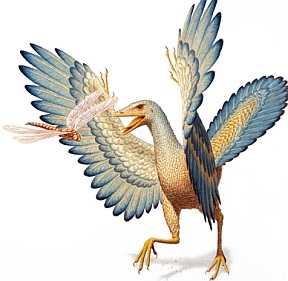
Tariits are an avian species native to Lygia, a world of vast plains, impenetrable jungles, and volcanic ridges. They appear to be small birds with three agile clawed digits growing from each wing. Their plumage tends toward shades of blue, yellow, or white, with females having feathers of duller shades. A full-grown adult taritt stands about three feet high with a wingspan about twice that.

To the casual off-worlder, a Tariit can easily be mistaken for a mere animal. These creatures are, however, intelligent beings who live in chaotic tribal communities. Tariits weave well-camoflauged dwellings out of grasses and leaves in the treetops of Lygian jungles. They make use of simple tools made of wood, bone, and stone. They subsist on insects, small reptiles, fruits, and nuts.

Life within a Tariit tribe is far from harmonious. Relations within a tribe are fractious as Tariits jockey for leadership over various aspects of daily life. Allegiances shift with confusing rapidity, and, what with the constant squabbling, it’s a wonder that Tariits manage their day-to-day affairs. Despite the constant power struggles and ever-changing factions, violence between Tariits of the tribe remains rare.

Psychology: Lygia is terrifying to Tariits, who are far from being the alpha predator of their environs. Tariit society based around hiding or protecting themselves from these many natural hazards of their world. The most revered Tariits are those who are best hidden or best protected, and who can give protection and concealment to their fellows. Most Tariits are quite cowardly by human measure, but occasionally they can be driven into a frenzy of terror in which they fight with the courage of the doomed.

Tariit as Player Characters: No Tariits have ventured off-world from Lygia. The very idea of taking to the heavens with the aliens who’ve set up a research outpost on Lygia is too terrifying to consider. Given their low tech level and cowardly disposition, Tariits would make poor player characters. Of course, an exceptional Tariit or two could defy their nature enough to become adventurers of sorts. If this is the case, Tariits should have a Strength score no higher than 10, a Constitution score no higher than 12, and a Dexterity score no lower than 13.

Stars Without Number Data

Tariit
Armor Class: 8
Hit Dice: 1
Attack Bonus: +1
Damage: 1d4 various primitive weapons
No. Appearing: 7-20
Saving Throw: 15+
Movement: 20 ft., 30 ft. flying
Skill Bonus: +1
Morale: 6

Lygia at a Glance
Population: Outpost
Atmosphere: Breathable Mix
Climate: Warm
Biosphere: Human Miscible
Government: Corporatist
Tech Level: 4 (0 among natives)
Tags: Friendly Foe, Primitive Aliens

October 3rd, 2013  in RPG 1 Comment »

The Fichae

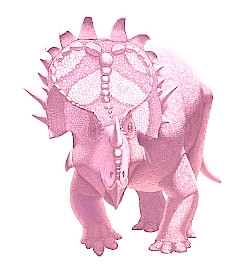
Herbivorous fichae (singular ficha) travel the vast verdant prairies of Lygia in small, competitive herds, usually comprised of an adult male, an adult female, and their offspring of various ages. Adult fichae are ponderous land animals. A full-grown bull stands 12 feet at the shoulder on average, and weighs around three tons. Full-grown cows are slightly smaller and lighter. These xenobeasts resemble ancient Terran ceratopsid dinosaurs, such as the triceratops or centrosaurus, but with rose and light purple scales.

Ficha cows go into heat about every seven Terran months, gestate for fourteen terran months on average, and typically deliver one or two young, which reach sexual maturity after about 16 Terran years. Mature bulls leave the herd in order to find a mate from another herd. This is a dangerous time the male’s life, for rival herds view unrelated males as threats. Violence against a rogue male by the herd’s alpha male is common.

Speaking of violence, fichae may be herbivores, but they are also aggressive, more likely to run at than away from a perceived threat. Against larger creatures, a ficha attacks with its powerful gore attack. Smaller creatures simply get trampled. When faced with a charging ficha, a smaller creature has a choice: either stand their ground and try to attack the ficha, or else to jump out of the way. In the former case, the smaller creature can attack with a -2 penalty before getting trampled for 4d6 points of damage. Otherwise, the smaller creature can attempt an Evasion save to leap out of the path of the ficha’s charge and avoid damage.

Stars Without Number

Armor Class: 3
Hit Dice: 12+12
Attack Bonus: +10
Damage: 2d6 gore, or 4d6 trample
No. Appearing: 3-9
Saving Throw:
Movement: 45 ft.
Morale: 8

September 29th, 2013  in RPG No Comments »

Baridipopo

During the last winter of King Geirthjof’s reign, the jǫtnar raged down from their mountain lairs, ravaging Geirthjof’s frontier lands. Forts burned, and hundreds of people fled the advancing jǫtunn horde. When news of the incursion reached Geirthjof, the aged king donned his armor, took up his lance, and mounted his griffon to lead his armies into battle one last time.

At Forni Pass, Geirthjof met the advancing jǫtnar, knowing he had to stop them in the chokepoint leading out of Baridipopo Valley. Otherwise, the jǫtnar could spread out through the more loosely defended lands closer to the capital. The battle lasted throughout the day and into the early hours of the evening. Thousands died, and Geirthjof himself fell under the axe of the jǫtunn jarl Thrúdgelmir, but not before the king struck the jarl a mortal blow.

The strange mingling of human and jǫtnar gore, of noble sacrifice and bestial rapaciousness, cursed the land. As winter months turned to spring, Baridipopo Valley failed to thaw. Indeed, cold and ice tightened their grip even more over the region. Today, no matter what, Baridipopo Valley remains locked in deepest winter. The arctic conditions fade as one moves away from the valley, but the valley itself is always frozen. Heavy snow and ice, sudden windstorms and blizzards, and air so cold that it burns the lungs combine to make life within Baridipopo Valley almost impossible. Even animals native to the arctic lands around the valley do not venture far into this eternal winter.

King Geirthjof’s frontier on the other side of Baridipopo Valley has yet to reclaimed. The pass through the valley cannot be used for trade and travel. The frontier’s burned-out forts and destroyed villages remain as grim monuments to jǫtunn savagery. Bands of jǫtnar prowl the frontier, but even they seldom venture into the valley.

“Why?” you ask.

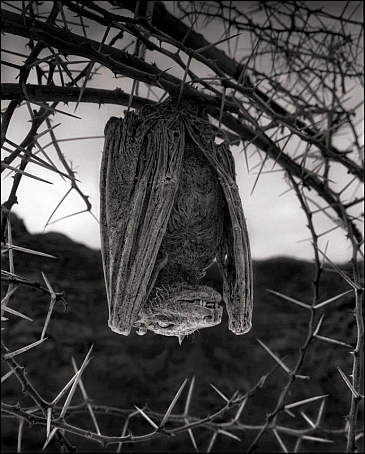
It’s not because jǫtnar cannot survive the frigid conditions of Baridipopo Valley, but because of the other dangers resulting from the strange curse that seized the land after Geirthjof’s death and victory. More than winter’s hazards await any who would trespass on the valley’s unhallowed land. Undead monsters made from corpses, ice, and terror stalk the valley. Colonies of deadly ice bats swarm through the dead, frozen forest.

Still, the brave or the foolish risk Baridipopo Valley’s dangers. The jǫtnar were known to have looted and pillaged the frontier, but the spoils of the victories were never recovered. Is their lost treasure locked in ice somewhere in Baridipopo Valley? So far, few adventurers have entered the valley and emerged with more than tales of terror and body parts lost to frostbite, but the successes are tantalizing: weapons with remarkable qualities, coffers full of gems and gold coins, et cetera.

What greater treasures may yet be discovered?

September 14th, 2013  in RPG No Comments »

The Alar Mantid

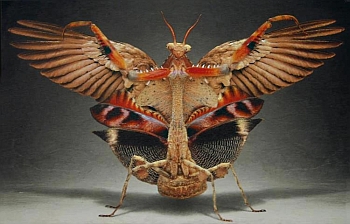
Alar mantids are a race of winged insectoids who dedicate themselves to meditative martial arts and aesthetic discipline. They typically live in remote monastic communities hidden in forest or mountain locations. Alar mantids resemble praying mantises nearly the height of a man. They have two sets of wings: two larger feathered wings and smaller set of moth-like wings. While they loathe violence, alar mantids are not pacifists, and they are formidable opponents when forced to fight.

If an alar mantid’s claw attack roll is 5 higher than the required to hit number, the target has a 75% chance to be stunned by the blow for 2d6 rounds. Moreover, the mystic perfection of the blow also has a 25% chance to kill the opponent, provided the opponent’s hit dice are no more than 1 higher than the alar mantid’s. All alar mantids can speak with animals at will (as the spell). Also, all alar mantids have the following thieving skills: Climb Walls 88%, Delicate Tasks 30%, Hear Sounds 4 in 6, Hide in Shadows 25%, Move Silently 35%, and Open Locks 25%.

Swords & Wizardry

Hit Dice: 4
Armor Class: 6 [13]
Attacks: 2 claws (1d6+2)
Saving Throw: 13
Special: Speak with animals, thieving skills
Move: 15 (Fly 18)
Alignment: Lawful
Challenge Level/XP: 6/400

September 4th, 2013  in RPG No Comments »

All Glory to the Hypnotoad!

The highly intelligent hypnotoad appears as a large amphibian measuring about two feet long. It has large oscillating multicolored eyes, and it emits a droning hum when it uses its psychic power. Its eyes glow all the time. A hypnotoad’s mesmerizing gaze affects a cone that’s 30 feet long and 30 feet wide at its farthest reach. All living creatures with a nervous system caught in the cone must make a saving throw or become fascinated and stand gazing at the hypnotoad for 1d6 minutes.

During this time, a hypnotoad can plant powerful suggestions in as many as 3d6 hypnotized creatures at once. (All creatures must be subjected to the same suggestion, and they gain a saving throw to resist the suggestion.) A hypnotoad’s suggestions can compel even directly self-destructive actions, but affected creatures are permitted a new saving throw with a +4 bonus in this case. Very reasonable suggestions may cause the saving throw to be made at a penalty (such as -1, -2, et cetera), at the GM’s discretion.

Stars Without Number

Armor Class: 7
Hit Dice: 1
Attack Bonus: +1
Damage: 1d3 bite
No. Appearing: 1
Saving Throw: 15+
Movement: 15 ft. (leap 100 ft.)
Morale: 7

Swords & Wizardry

Hit Dice: 1
Armor Class: 7 [12]
Attacks: 1 bite (1d3)
Saving Throw: 17
Special: Hypnotism, leap
Move: 3 (or leap 100 ft.)
Alignment: Chaos
Challenge Level/XP: 3/60

September 2nd, 2013  in RPG No Comments »