Posts Tagged ‘ monsters ’

Three Unique Skeletons

If you’re wondering, no, I’ve not forgotten about the goblin spider lair. I just have to remember to find the maps that I was working on.

And, so, onto today’s post.

Patreon artist Fernando Salvaterra recently posted this fun illustration of three skeletons about to teach a group of tomb trespassers a lesson about property rights. Nota Bene: If you click on the pic, it embiggens.
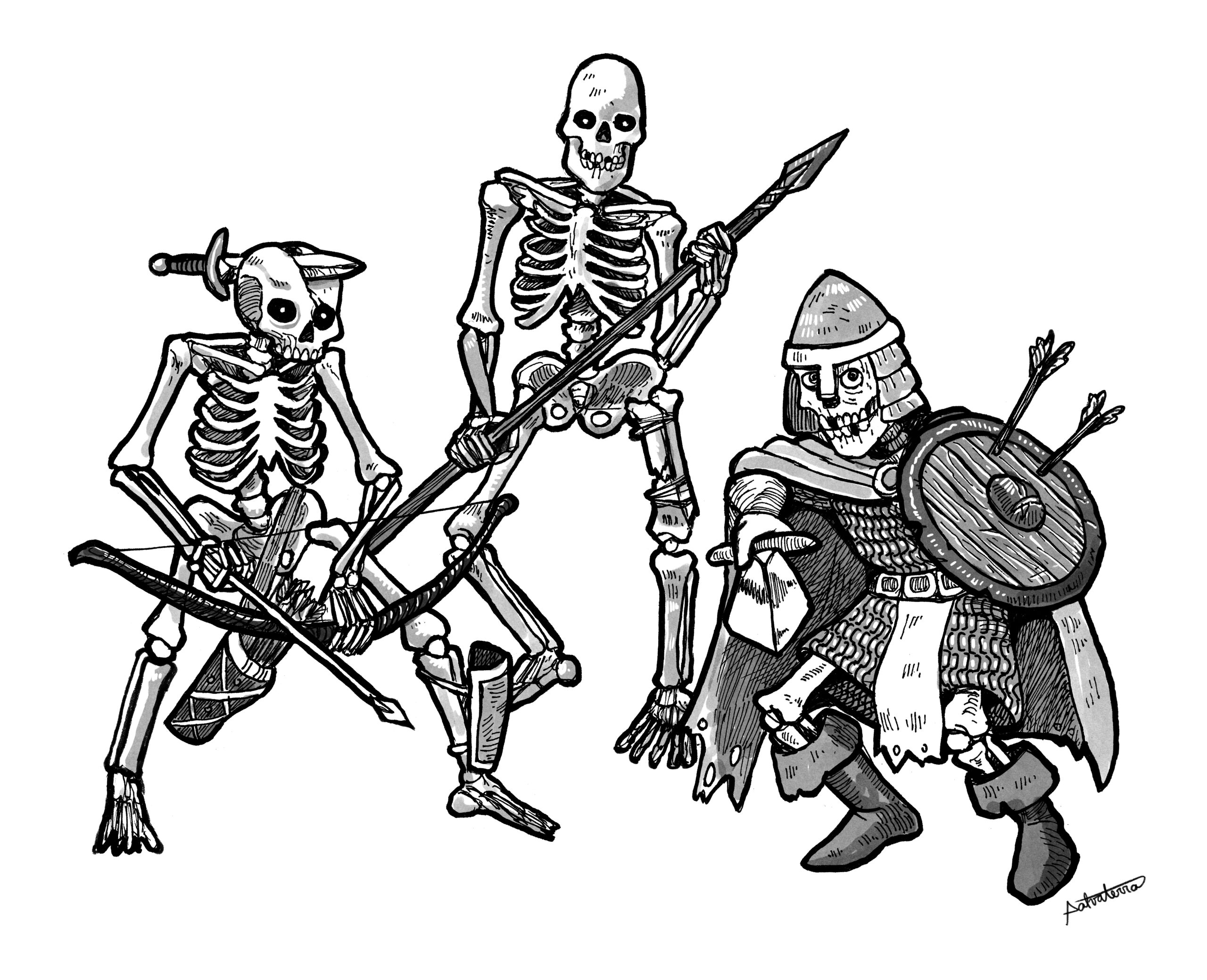
Each skeleton has a magic item it uses in combat. These magic items detect as evil. Each has the same deleterious effect when used by non-evil creatures, namely that the creature suffers a -1 penalty to saving throws against fear effects per item used.

The Archer
Number: 1
Size: Medium
HD: 2 (d12) (13)
AC: 13
Saves: P
Move: 30 ft.
Attacks: 2 with Short Bow (1d6 plus magical effect) or 1 with Short Sword (1d6)
Special: +1 or Better Weapon to Hit, Magic Quiver, Regeneration 1, Undead
Int: Average
Alignment: Neutral Evil
Type: Undead (Unique)
Treasure: 4
XP: 56

Combat: The Archer prefers ranged combat, firing two arrows per round from its shortbow. If forced into melee, it pulls the short sword from its skull. The Archer cannot be harmed by nonmagical weapons, and even magical slashing or piercing weapons inflict but half damage to it.

Magic Quiver: The Archer’s magic quiver holds a dozen arrows. Each day at sundown, the magic quiver refills with a dozen arrows. When an arrow is pulled from the magic quiver, roll 1d6 to determine that arrow’s magical effect:

1-4 = +1 to hit and damage
5 = +2 to hit and damage
6 = +3 to hit and +1d6 damage against a living creature

Regeneration: The Archer regenerates 1 hit point per round until reduced to 0 hit points, at which time it regenerates 1 hit point per hour. The Archer cannot regenerate damage from holy water.

Undead: The Archer is immune to poison, sleep effects, paralysis, stunning, disease, death effects, and all mind-affecting spells (charms, compulsions, et cetera).

The Spearman
Number: 1
Size: Medium
HD: 3 (d12) (20)
AC: 13
Saves: P
Move: 30 ft.
Attacks: 2 with Magic Spear (1d6+1)
Special: +1 or Better Weapon to Hit, Magic Spear, Regeneration 1, Undead
Int: Average
Alignment: Neutral Evil
Type: Undead (Unique)
Treasure: 4
XP: 120

Combat: The Spearman prefers melee combat, attacking twice per round with its magic spear. The Spearman cannot be harmed by nonmagical weapons, and even magical slashing or piercing weapons inflict but half damage to it.

Magic Spear: The Spearman’s magic spear is a +1 weapon. If thrown, it splits into two spears that may target any two creatures within 10 feet of each other (or both may target a single creature within spear range). The thrown magic spears disappear at the end of the round, reappearing in the Spearman’s hand as a single spear.

Regeneration: The Spearman regenerates 1 hit point per round until reduced to 0 hit points, at which time it regenerates 1 hit point per hour. The Archer cannot regenerate damage from holy water.

Undead: The Spearman is immune to poison, sleep effects, paralysis, stunning, disease, death effects, and all mind-affecting spells (charms, compulsions, et cetera).
The Captain
Number: 1
Size: Medium
HD: 4 (d12) (26)
AC: 18
Saves: P
Move: 30 ft.
Attacks: 2 with Magic Sword (1d8+1)
Special: +1 or Better Weapon to Hit, Magic Sword, Regeneration 1, Undead
Int: Average
Alignment: Neutral Evil
Type: Undead (Unique)
Treasure: 4
XP: 224

Combat: The Captain prefers melee combat, attacking twice per round with its magic sword. The Captain cannot be harmed by nonmagical weapons, and even magical slashing or piercing weapons inflict but half damage to it.

Magic Sword: The Captain’s magic longsword is a +1 weapon. Against lawful good creatures, the sword inflicts an addition 1d6 points of damage with a successful hit.

Regeneration: The Captain regenerates 1 hit point per round until reduced to 0 hit points, at which time it regenerates 1 hit point per hour. The Archer cannot regenerate damage from holy water.

Undead: The Captain is immune to poison, sleep effects, paralysis, stunning, disease, death effects, and all mind-affecting spells (charms, compulsions, et cetera).
July 23rd, 2024  in RPG No Comments »

UFOs for Castles & Crusades

I’m still not back on track with what’s supposed to be regular posting. It’s not that I’ve accomplished nothing since my last post, but nothing I’ve accomplished explores the goblin-spider’s lair enough to be worth a post.

But, I did do this!

Unidentified Female Observer
Number: 1-4, 6-24
Size: Medium
HD: 6 (d8)
AC: 15
Saves: M, P
Move: 40 ft.
Attacks: By weapon (see below)
Special: Alien Technology, Telepathy
Int: Superior to Genius
Alignment: Lawful Neutral/Evil
Type: Extraplanar
Treasure: 6
XP: 330 + 6

UFOs appear much like lovely humans (or maybe half-elves) who wear tight clothes made from what looks like shiny, metallic fabric. They wear strange masks and helmets or headdresses. Graceful and strong, many UFOs avoid combat, seeking to study what to them are strange forms of life, but evil UFOs may abduct creatures in order to perform painful experiments upon them.

UFOs speak their own language. They may choose to communicate telepathically, and this ability transcends language barriers.

Combat: UFOs use weapons in combat. A certain UFO will have 2-3 weapons available. See below for a suggestions.

Alien Physiognomy: A UFO’s Strength, Dexterity, and Constitution scores range from 13-18 (1d6+12). Adjust attacks, damage, hit points, et cetera as appropriate. When determining encumbrance, count Strength and Constitution as prime attributes.

Shiny Metal Fabric: A UFO’s clothing has a +5 AC bonus and an EV of 1.

Strange Helmet/Headdress: A UFO’s helmet/headdress has a +5 AC bonus and an EV of 1. It can be set to deepvision, see invisibility, locate object, or twilight vision.

Telepathy: UFOs may communicate telepathically. They understand all languages and can communicate with all creatures, save those with no discernible intelligence.

Weapon – Belt: When activated, the belt duplicates protection from arrows (1 charge), invisibility sphere (2 charges), teleport (3 charges), or wall of force (3 charges). These operate as if cast by a 9th-level wizard. The belt has 9 charges when fully charged. It regains 3 charges per day.

Weapon – Blaster: This hand-held ranged weapon fires a blast of destructive energy that duplicates burning hands (1 charge), magic missile (1 charge), shatter (2 charges), or lightning bolt (3 charges). These operate as if cast by a 5th-level wizard. The blaster has 7 charges when fully charged. It regains 3 charges per day.

Weapon – Rod: This hand-held melee weapon carries a powerful electrical charge that inflicts 1d8+5 points of damage with a touch attack roll.

May 1st, 2024  in RPG No Comments »

Fimir for C&C

Today, I shift away from Chaos Goblins and the Undead and toward the Fimir, found on pages 218-219 of the 1989 Warhammer Fantasy Roleplay (WHF).

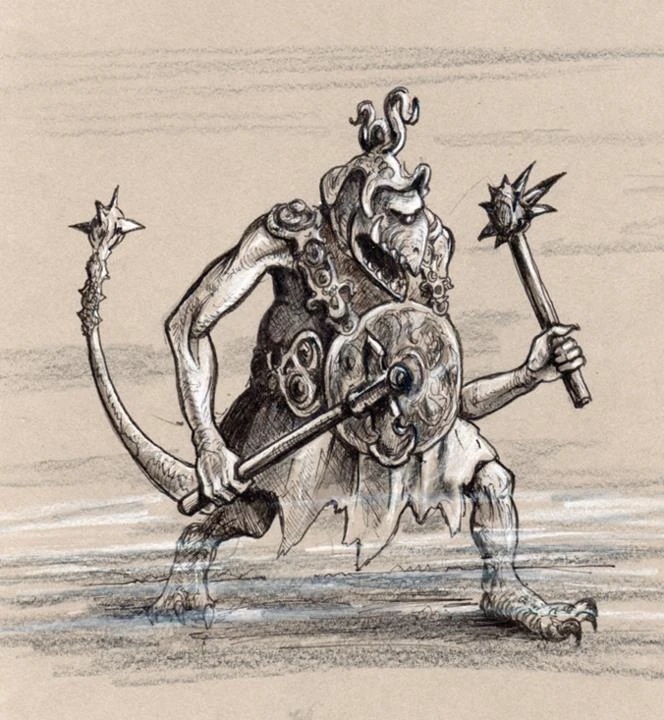
WHF tells us that the Fimir might be “part Human and part Demon” and that they “haunt bogs, fens and desolate moorlands throughout the northern and western wastes of the Old World.” While usually fond near coasts, Fimir dwell “anywhere that is suitably dank and dismal”, where they live in “strongholds [that] are typically forbidding, craggy piles of rock, crudely built in the semblance of human castles on jutting headlands and other rocky eminences”. These strongholds are “constantly wreathed thick, writhing mist”.

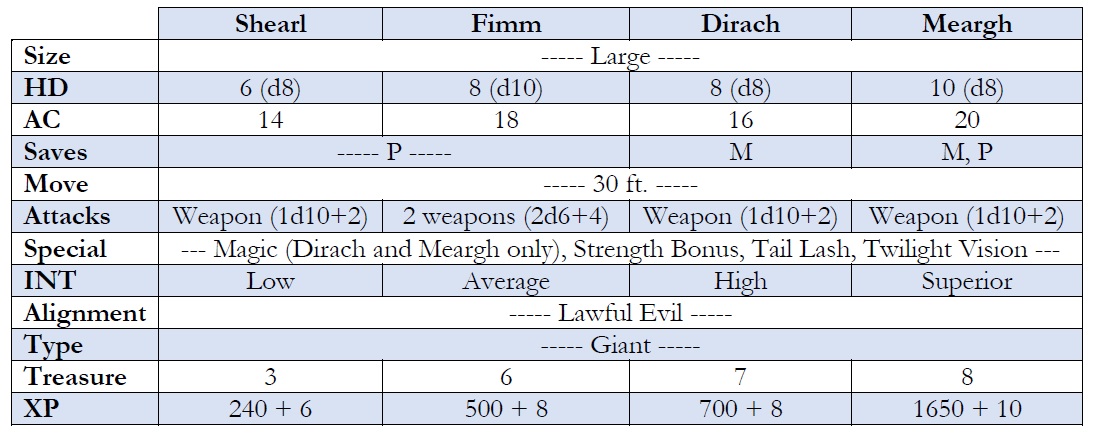
“The Fimir are creatures of mist and darkness, and shun bright light.” They live in communities populated “almost entirely of males”. These creatures have a caste system. From lowest to highest, these castes are the Shearl (thralls), “a cast of servitors and menials”; the Fimm (warriors), “to which the bulk of Fimir nobility belongs”; the Dirach (demonfriends), “a small but powerful cast of magicians”; and the greatly feared Meargh (hags), “the witch-queens that rule over Fimir strongholds. The Meargh are the only female Fimir.”

Fimir live by raiding isolated communities to seize food and prisoners. Since the Meargh are sterile, Fimir “abduct Human women” with which to breed; offspring of these blasphemous pairings are always fully Fimir whose castes are obvious at birth. Very few female Fimir are born, and most of those are killed by the stronghold’s reigning Meargh.

These raiding parties “generally consist of a dozen or so Fimm and a roughly equal number of Shearl”. Along coastlines, Fimir “travel in low-hulled, black longships.” For important raids, a Dirach leads the Fimir. Meargh are seldom encountered outside their strongholds. Fimir favor “great heavy maces and axes, which a Human would need both hands to wield; some Fimir, especially the nobility, go into battle with one of these weapons in either hand. Fimir do not generally use missile weapons, since the fog which is their natural element precludes missile fire.”

“Fimir dress in an almost Human fashion, but always leave the legs, arms and tail bare. The Fimm often weapon shirts of chainmail in battle, and nobles favor long cloaks fastened at the shoulder by heavy brooches of gold set with gems.” Fimir nobles love blood-colored gems. “Dirach and Meargh wear long, drab-coloured robes and cloaks.”

Fimir resemble large humanoids with powerful chests, short legs, feet with three clawed toes, and long arms that nearly reach the ground. Fimir are quite strong, with strong muscles hidden beneath a flabby layer of fat covered by leathery skin. They have large, mostly bald heads that resemble a cross between a boar and a lizard, with a single lidless eye. Fimir have no exterior ear structures. The average Fimir stands about eight feet tall, but they typically stand hunched over. Fimir also have “powerful, snake-like tails, which average about 6 feet in length.”

Fimir

Magic: Dirach cast spells as an 8th-level wizard. Dirach always know summon lesser monster. Due to their pacts with hellish powers, a Dirach can summon a specific type of monster, as desired, and the summoner can communication with its summoned monsters. Meargh cast spells as 10th-level wizards. Furthermore, a Meargh can prepare cleric spells of up to 3rd level in place of wizard spells of the same level. These cleric spells are gained through devotion to evil deities.

Furthermore, once per day, Dirach and Meargh can cast fog cloud. The bilious fog created by this ability is centered on and moves with the caster.

Strength Bonus: Due to their size and strength, Shearl, Dirach, and Meargh receive a +2 bonus to melee weapon damage (including tail lashes). Fimm receive a +4 bonus to melee weapon damage.

Tail Lash: In place a melee weapon attack, a Fimir may lash out with its tail, striking at a creature no farther away than 10 feet. A The tails of Shearl, Dirach, and Meargh inflict 1d6+2 points of damage. Fimm have stronger tails that end in bony knobs or spikes for nobles. These tails inflict 1d10+4 points of damage.

Twilight Vision: No type of fog — natural or magical — obscures a Fimir’s vision. Fimir dislike bright light. They suffer a -2 attack roll penalty in bright light as well as a -2 penalty on saving throws against fear while exposed to bright light.

December 6th, 2023  in RPG No Comments »

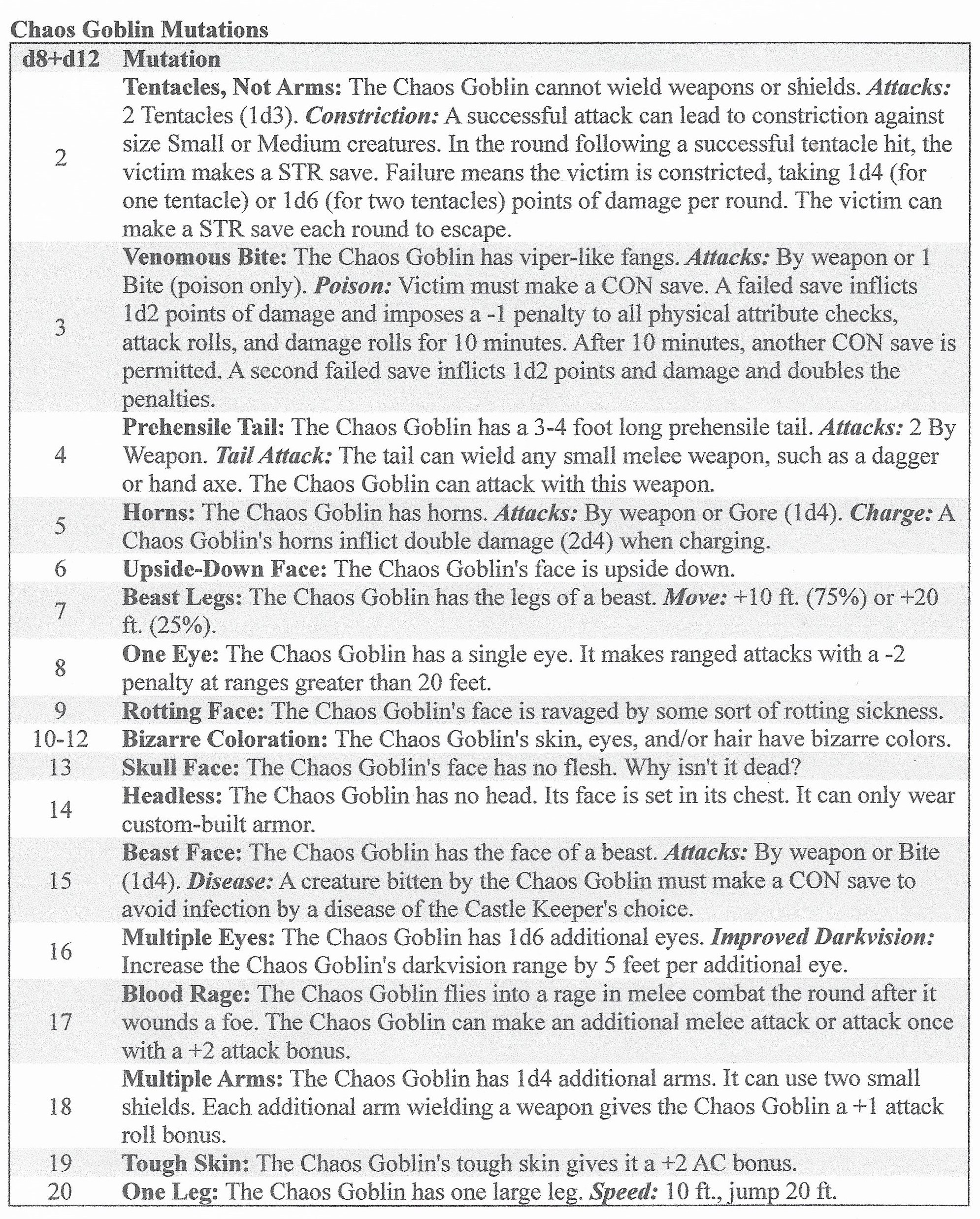
Chaos Goblins for C&C

Yeesh. It’s been about a month and a half since my last post. That’s probably not my worst lag, but it’s an impressive anti-accomplishment nonetheless.

So, I had been posting about converting content from the 1989 Warhammer Fantasy Roleplay (WHF) for use with Castles and Crusades. Today, at long last, is no exception. I took the Mutation tables from the Chaos Beastmen (WHF 216) and Warrior of Chaos (WHF 230) to create a Chaos Goblin Mutations table.

Enjoy!

November 24th, 2023  in RPG No Comments »

Marshlight for C&C

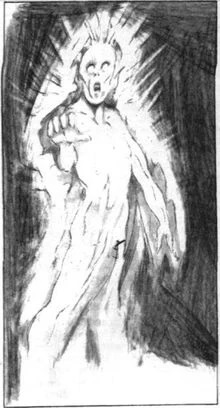
The 1989 Warhammer Fantasy Roleplay (WHF) has few undead not already part of Castles and Crusades. Last post, I converted the Carrion. This post? The Marshlight.

Marshlight
Size: Small to Medium
HD: 1 (d8)
AC: 12
Saves: M, P
Move: Fly 40 ft.
Attacks: None
Special: Darkvision 60 ft., Incorporeal, Mesmerism, Undead Instability
INT: None
Alignment: Neutral Evil
Type: Undead
Treasure: 1
XP: 15 + 1/hp

From WHF 252: “Marshlights are ethereal creatures which take the form of glowing lights; they can appear to be lanterns, vaguely humanoid figures or other crude shapes. …. They are dangerous not because of any physical damage they cause, but because of the compelling hypnotic effect, by which they lead mesmerised characters to their deaths. It is thought they feed in some vampiric way upon the ebbing life forces of their victims.”

Combat: A living creature with greater than animal intelligence must make a successful charisma save upon seeing a Marshlight that is within 300 feet. Elves and half-elves apply their resistance to charms to his save. If the save is successful, the creature is immune to that Marshlight’s mesmerism for 24 hours. Mesmerised victims walk toward the Marshlight, taking the most direct route available. Mesmerised victims takes no actions other than to defend themselves and move toward the Marshlight. A mesmerised victim who takes damage or who loses line-of-sight to the Marshlight is freed from that Marshlight’s enchantment.

Incorporeal: Marshlights exist only partially within the mortal realms; most of their essence resides in the ethereal. A creature in the mortal realms cannot attack a Marshlight except with magical weapons of +1 or better. Marshlights are immune to cold- and fire-based attacks.

October 9th, 2023  in RPG No Comments »