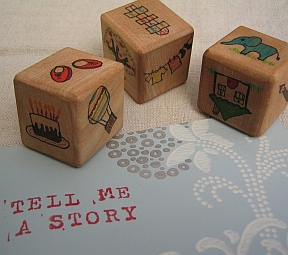
On-the-Fly Gaming

This past week hasn’t been a good week for getting game stuff done. I was out of town much of the week visiting Ridgeview Classical Schools in Fort Collins, Colorado. Their mission, philosophy, et cetera, are very similar to ours where I teach in Katy, Texas, so my school sent me and two other teachers there to kick down doors and loot ideas.

So, about game stuff: A couple of weeks ago, Man Day Adventures kicked off the first session of our new Stars Without Number campaign, meta-titled Amazing Future Tales. As the GM, I’ve decided to pummel the heck out SWN with rules stolen from other games. You can read about the first session here. You can check out the wacky house rules here.

Assuming you read the first session, you noticed one of the characters issuing assignments to the other characters. I didn’t plan that. The players, especially Terry, made all of that up on the spot. I liked that. It made the story more theirs and less mine. It also keeps me from having do prep work as a GM. I’ve got a bare-bones plot for the adventure. I’m ad-libbing the rest with the help of the players. How can that be a bad thing?

A few weeks ago, I played a session of InSpectres. In that game, players have wide-ranging ability to determine specific plot elements, in effect making up the plot as the game progresses. It was a hoot and a half.

To explain simply, characters have a certain number of dice divided between four broad areas of competence. The characters interact with the game environment, the player rolls the applicable number of dice, and the highest result (most of the time) determines how much of the narrative is controlled by whom. A really great die roll means the player has almost carte blanche to determine the result of the roll. Lesser results impose specific restrictions, and the least results give the GM the carte blanche.

I’m mulling using a modified version of the InSpectres narrative resolution mechanic with Amazing Future Tales. At the moment, I’m not quite sure what that’d look like. My initial instinct is for each player to have a pool of “story dice” that they can use to determine results. The player decides how many “story dice” to use for a given situation. The more dice rolled, the greater the chance the player gets to dictate the results. Once “story dice” are used, they are deducted from the player’s pool.

For example, let’s say that the players have just uncovered something mysterious (such as the man who attacked A.J. in our first session). As the GM, I don’t know who this man is. Wes said he wanted to see how combat worked, so I had his character get ambushed. Maybe one of the players, however, has a good idea about who this man is. Let’s say this player is Gary.

Gary decides to spend a couple of “story dice”. He rolls and gets a good result. Gary can then make his idea about the man’s identity, circumstances, et cetera, an official part of the story.

Gary could say, “Well, after we get him cleaned up, I recognize him as a researcher from a different station closer to the coast. He’s weak and feverish from exposure and sickness, but he could provide important information about what’s really going on the jungle.”

Could I have come up with that on my own? Obviously, since I just did, but that’s not the point. The point is that one of my players gets to help shape the narrative-in-progress to make the story more like what he wants it to be.

Again, how can that be a bad thing?

May 18th, 2013  in Man-Day Adventures 1 Comment »

Arcasparv’s Doomful Gullet

Arcasparv’s Doomful Gullet
Spell Level: Magic-User, 4th Level
Range: 180 feet
Duration: 4 rounds

Arcasparv’s doomful gullet rips open a passage between the spell’s target point and the gullet of a transdimensional demon. The caster selects 2d4 victims within 20 feet of spell’s center. Victims that fail their saving throws are sucked into the gullet, where they are effectively immobilized by the crushing and tearing horror of the infernal esophagus. Victims take 2d6 points of damage per round for the duration of the spell. When the spell ends, victims are disgorged near their original locations.

May 5th, 2013  in RPG 3 Comments »

Amazing Future Tales

Man Day Adventures kicked off our new campaign yesterday. You can read the growing amount of campaign information here. We’re using Stars Without Number with some story-telling roleplaying game tweaks. (Check out my house rules to find examples.)

You may notice that Amazing Future Tales doesn’t have anything to do with my under-development Tiamat’s Throne. My players vetoed science fantasy as a genre, preferring more straightfoward science fiction. That’s cool. It’s not like I can’t use a lot of what’ll get developed for the new campaign in Tiamat’s Throne.

Anyway, the first session was a short one. We were missing two players, and another had to leave early. Even still, we got characters created. Specifically, each player created four 0-level characters. Our first adventure is “The Jungle That Hates”, a character-funnel scenario.

Gary ended up with one of his characters, Jack Owen, being the supervisor at Camp Goodall. I handed him the personnel roster and told him to conduct the morning agenda. Gary got a bit flummoxed by the sudden responsibility of spinning out story elements, so Jack Owen passed the buck to Vanessa Amaro (played by Terry).

Vanessa assigned jobs for the day, dividing up the 16 characters into four teams (except for Wes’s Dave Thomas, who stayed in camp). We then jumped to the first group investigating Mandolarian shag ferns so that we could see how the skill check mechanic works. Wes wanted to see how the combat mechanic works, so we shifted to the second team at the henhouse habitat to have Terry’s A.J. Johnson get jumped by a haggard lunatic.

After that, we had to break for the day. Next session is 18 May. If our missing players make it that day, we’ll add eight more 0-level characters to the character roster, and then unleash the ravening hellbeasts.

Characters that survive the funnel get to advance to first level, and then become the core crew of the campaign’s official focus.

May 5th, 2013  in Man-Day Adventures, RPG No Comments »

Z Is for Zowie!

And here we are, my last post for the 2013 A to Z Challenge. I finish up with some last rules-tweaks for my upcoming Stars Without Number campaign (which you can check out here).

The Natural 20

Any roll on a d20 that ends up showing 20 on the die face is a natural 20, and a natural 20 lets the rolling player bring the zowie.

The Natural 12

Any roll on 2d6 that ends up showing 6 on both dice is a natural 12, and a natural 12 lets the rolling player bring the zowie.

The Zowie

Many games have critical hits and/or critical success rules. Often, these rules magnify the success in some predetermined way. For example, a critical hit may do double damage or permit a roll on some table of grisly results. The ordinary sorts of critical success rules are fine, but they aren’t zowie. I want zowie. Preferably with an exclamation point. Zowie!

On a natural 20 or natural 12, the player gets almost total narrative control over the effects of his zowie success.

For example, Terry’s character Ebenezer is in a desperate fight with a Sarxian howling tiger. This isn’t a beast any sane person wants to face armed with only a synthalloy knife. Terry rolls a d20 for hack and slash, and he rolls a natural 20. Terry narrates the result: “I fall back as the Sarxian howling tiger leaps, its claws and fangs slashing the air, and I bring the synthalloy knife up in a desperate strike. The blade slips between the xenobeast’s ribs and punctures its heart, killing it almost instantly!”

For another example, Wes’s character Rob is piloting a lightly armed spaceskiff while being pursued by four pirate fighter crafts. He veers into a dense asteroid field, and must make a Vehicle/Space check. He rolls 2d6 and gets two sixes. Wes narrates the result: “I swoop into the asteroid field, putting more distance between me and the pirates. Then, I dive at a large asteroid, flying mere yards above its tumbling, unyielding surface, luring the four pirate fighter crafts into dangerous territory just as I rocket away from the asteroid’s crushing weight. Not all of the pirates manage to do likewise.”

April 29th, 2013  in RPG 1 Comment »

Y Is for Yanking Time’s Leash

In my ongoing quest to give my players more narrative control over the game, I’ve been researching RPGs that include more story-based mechanics, rules, et cetera. I’ve bought, read, and played a bit with Ben Robbins’s Microscope (the link goes to a playtest report). I also recently played InSpectres, during which I got to show off my occult Tibetan dancing skills (see yesterday’s post for video of me in all my terpsichorean glory). In both Microscope and InSpectres, players have wide-ranging ability to determine the narrative of the game, to include metaphorically going back in time to modify the current reality via flashbacks.

I like this idea, and I want to use it with my upcoming Stars Without Number campaign. I read a brief explanation from Cam Banks about how the Leverage RPG handles flashbacks, and it sounds like what I’m looking for. Mr. Banks noted that there are two types of flashbacks: establishment flashbacks and wrap-up flashbacks. Let’s quote Mr. Banks:

“Establishment flashbacks, by which you establish some part of the story that up until then hasn’t really been revealed (good for back stories, recollections of childhood, etc) and which create Assets you can use in a future scene, and…

“Wrap-up flashbacks, which are coordinated by the Mastermind and allow all the players to introduce some unrevealed retroactive story element from the Job itself and provide the Mastermind with his necessary dice for the final resolution against the Mark.”

Now, let’s take these descriptions, and expand/modify them for Stars Without Number:

Establishment Flashbacks

Once per game session, each player can involve a character in an establishment flashback. This lets the player narrate in first person a brief event from an earlier time and explain how that event affects the game’s current action.

For example, a pack of vicious xenobeasts pursue the characters through the rugged jungle. Kurt realizes they cannot hope to outrun the ravening predators. Kurt’s player Eric invokes a flashback. “I, Kurt, am very familiar with this particular stretch of jungle. I’ve often retreated from the work-a-day world of our research facility. Just up ahead, there’s a well-hidden cave in a low hill, the entrance obscured by flowering trillian orchids. If we duck into the cave, the xenobeasts won’t be able to track us by scent anymore.”

Or another animal-related flashback as the characters ponder how avoid the well-trained guard dogs patrolling the grounds around a building they must access. Christopher has an idea, and invokes a flashback: “Before we came here, while we were getting our gear ready and what not, Chuck and Rob bought some Yummee Treets dog snacks and laced them with tranquilizers from the infirmary. We figured there’d be guard dogs, and that the drugged Yummee Treets would make avoiding them easier.”

Wrap-Up Flashback

A wrap-up flashback can be invoked once per adventure. In a wrap-up flashback, the players collectively decide on one modification to the current situation that each of their characters could have performed. Each modification is intended to give the group an advantage in the current situation. The threat or obstacle must still be dealt with, but the cumulative effects of the characters’ preparations make the outcome in the characters’ favor much more certain.

For example: The characters face a band of ruthless kidnappers. The victims are tied up and rigged with explosives. The villainous leader holds a dead-man’s switch. His henchvillains have their weapons trained on the characters. The situation looks grim. The players decide to invoke a wrap-up flashback.

Wes: “I figured the cad might rig up some remote-detonated explosives. That’s why I rigged up a small but powerful transmitter that blankets an area with electronic ‘white noise’, temporarily stopping radio signals and what not.”

Terry: “That’s good. Earlier, when the scarred thug got the drop on us and shoved me, I managed to lift his elevator control key without him realizing it.”

Christopher: “Wow, I was nowhere near the foresightful. Before we left headquarters, I called a cop buddy of mine. He gave me a small radioisotope pellet that I inserted into the weave of my belt. The police have been tracking the pellet all this while, and probably have this so-called secret location surrounded by now.”

Eric: “Impressive, Chuck. I too engaged in a bit of sleight of hand on one of the guards when we were being escorted in here. I placed a small but potent psitech grenade in the cargo pouch of his pants. I can detonate the grenade with a telepathic signal. It’s not a large explosion, but it’ll probably take his legs off.”

Needless to say, the villains are quite surprised by how the tables end up being turned!

Caveats

A flashback cannot outright contradict something that is already established as a fact in the game. In the wrap-up flashback example, Wes couldn’t simply declare that he had grabbed the dead-man’s switch. The device is right there in the bad guy’s hand. A flashback also can’t be used to simply solve a major plot point. Christopher, for example, couldn’t claim he had snuck in and freed the hostags with no one noticing.

Also, a flashback doesn’t necessarily result in automatic success. In Christopher’s establishment flashback example, the GM could require a skill check to ensure the proper dosage of tranquilizers are used. The dogs could also get some sort of saving throw against the drug’s effects.

A player can involve another player’s character in a flashback, but the character’s actual player can veto or modify details as they relate to his character specifically.

And, of course, the GM remains the final arbiter of what these caveats look like in the game. This isn’t to say a GM can simply

Undefined Bits

You might be wondering, “Um, where did that radioisotope come from? Where did Kurt get that psitech grenade? How about those tranquilizers, and did Chuck even have any medical training?”

Flashbacks may require that certain character assets be undefined until they are used. It’s perhaps difficult to come up with a hard-fast rule for how this should work. Can a character use a flashback to call in a warship strike against an enemy stronghold? Probably not. This sort of asset is unlikely to be within the reach of most characters. As a general rule, a character cannot use a flashback to create any asset that the character cannot afford with his available resources. Thus, a character can have a pool of credits, for example, that he can define on-the-fly as having been spent to the purchase assets used in a flashback.

Likewise, a character may leave a skill undefined. This permits a character to reveal via flashback that he has always knew a particular skill, but that he hasn’t revealed this hidden talent until the appropriate time. For example, a 1st-level character may have Vehicle/Any as both a background and a training package skill. As such, the character could start with Vehicle/Space +1 at 1st-level. Instead, the player could decide to leave his Vehicle/Any choices undefined. Then, during an adventure, when the need to pilot a gravcar pops up, the player can use a flashback to explain that his character was once a delivery specialist in a busy urban center who used his gravcar to get packages to his clients.

April 29th, 2013  in RPG 1 Comment »