Bayou of Feathers 4: Some Geology
As mentioned in the first post about the Bayou of Feathers:
Legend says that Droainon, Goddess of Water and Sorrow, created the Bayou of Feathers as a gift for Tronsos, God of Thieves and Beauty, who failed to be moved by Droainon’s display of unrequited love. The region had been rolling plains and forests divided by a mighty river. Droainon dammed the river with great granite blocks decorated with an enormous bas-relief of thousands of birds in flight. Hurt by Tronsos’s derision at her gift, Droainon wept bitter tears into the bayou’s waters, and these tears turned the water brackish and pestilential.
Despite these adverse conditions, a group of refugees have settled in the Bayou, taking residence on a small group of a islands:
Refugees fleeing a nearby region have moved into the Bayou of Feathers, encamping a few clustered islands. The establishment of their new community has not been easy. The bayou’s waters are not safe to drink unless properly treated; what’s more, the brackishness makes agriculture difficult.
In the following two posts, I determined that the refugees are were-alligators. This throws a new light on the situation. The brackish water is not a problem for were-alligators, who are primarily carnivorous, thus alleviating the problems that agriculture might suffer. Also, alligators have immune systems well-adapted to swampy environments. So, the plethora of parasites and diseases in the Bayou are not a major concern either. It stands to reason that the refugees chose wisely the Bayou of Feathers. It is something akin to a paradise for were-alligators.
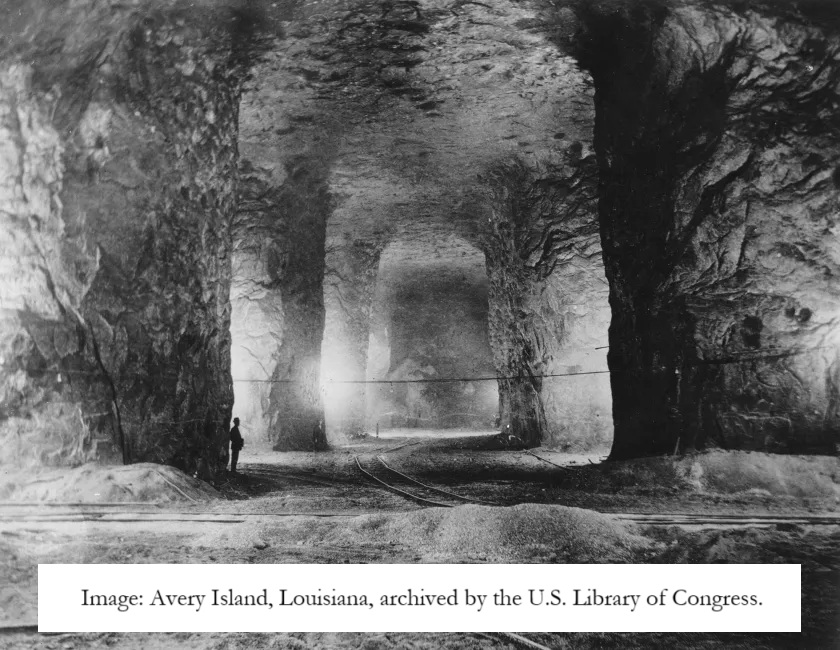
Over the weekend, my lovely wife Katrina and I visited Avery Island in Louisiana. I learned new things, chief of which for this post is that Avery Island sits atop a salt dome. One or more the refugees’ islands also sit above a salt dome, which both provides a natural explanation for the brackish waters and also gives the were-alligators control of a vital resource. That’s right. The were-alligators also mine salt, which is high value export.
As for the were-alligators themselves, I don’t see any reason why they ought to be especially evil. The accusations of cannibalism against them could be true, but what if the refugees only ate those who attacked their community? Under the best of circumstances, cannibalism is socially tricky, but defensive cannibalism could be a bit more palatable. What’s more, the were-alligators have left their belligerent neighbors to settle in an area with no human population, which makes defensive cannibalism unnecessary.
The refugees are not wicked people. They want to be left alone, to raise their families, et cetera. The bulk of the were-alligator community is somewhere near neutral in terms of alignment.
And last, there’s this: When reviewing my previous Bayou of Feathers posts, I reminded myself that I promised a hex map of the region. I need to get to work on that so that maybe – just maybe – I can get it posted later this week.

