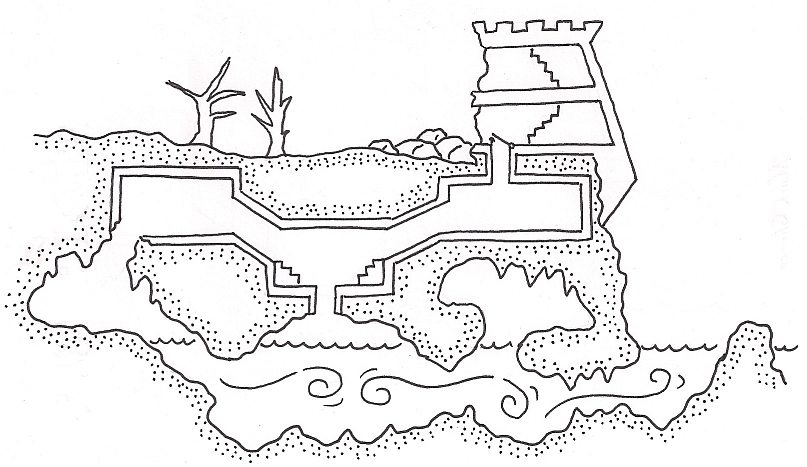
I had intended this for The Grand Original Map Contest, but I didn’t get it done in time. Ah well. Just because I missed a deadline doesn’t mean all of these electrons have to go to waste.
What Happened to the New Dawn Combine?
Two generations ago, the New Dawn Combine on Cygnus III thrived as a center for innovation in sector heavy weapons technologies. Lynley, the company town built around NDC labs and offices, provided workers, executives, researchers, and their families with every modern convenience. Life was good.
But nothing lasts forever.
A massive solar storm overwhelmed Cygnus’s magnetic field, disrupting electronics throughout Lynley. This was the time the Freedom Fellowship struck a blow for the proletariat. Mobs well armed but ill organized rampaged through the streets while the Fellowship’s elite assaulted key arsenals. The revolutionary violence climaxed when someone — to this day, historians debate whom to blame — launched a multiple independently targetable reentry vehicle armed with payload of chemical weaponry. Thousands died within minutes, and even more sickened and expired over the next few days. Much of Lynley burned as fires raged out of control as first responders were overwhelmed by the number of emergencies.
Planetary government moved in much too late. By the time military personnel and disaster management teams arrived, Lynley was a city fit only for the dead. Sporadic violence near the city limits lasted for a few more days, and then the government declared Lynley and the surrounding area in a 50-mile radius to be a quarantine zone (or QZ for short). No one and nothing is allowed in or out of the zone.
But life finds a way.
A handful of Freedom Fellowship radicals survived and declared the revolution a success. They consolidated control over limited food and potable water resources, and then put out the call to other survivors to enjoy the Fellowship’s largesse. Little by little, a semblance of normalcy returned to Lynley. A handful of buildings were reclaimed and turned into the communal areas with the Fellowship’s leaders determining individuals’ needs and commensurate allowances of living space, food, and water.
Little could be done, however, about the toxic effects of the chemical weaponry that had decimated Lynley. The ground was poisoned, and the water cycle became a means which toxins entered plants and animals. Fellowship workers documented the first evidence of mutations in water plants, fish, and amphibians. The high incidence of miscarriages and birth defects in the human population added a new level of dread to life in Lynley.
Today, the QZ is a wild area of twisted vegetation, mutated animals, and ruined buildings. Most of the vegetation is at least slightly toxic, and most of the mutated animals are merely grotesque. Some, however, are dangerous, especially the predatory chemical worms. The QZ’s easiest access points are protected by sensors, automated guns, and platoons of soldiers. Armed drones patrol more difficult areas. Entering the QZ without proper authorization is difficult. Getting back out after entering illegally is even harder, and failing exist undetected is likely to end in a violent death.
These risks don’t stop adventurous black marketeers from violating the QZ in hopes of finding hidden caches of weapons and other military-grade tech. The New Dawn Combine had numerous facilities prior to the revolution, and this included arsenals protected by underground bunkers. Illegal military tech isn’t easy to come by, and the profits can be substantial.
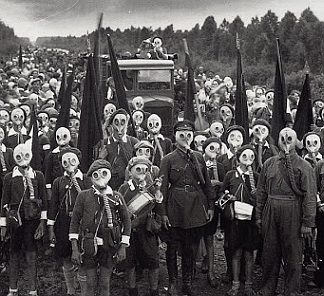 Of course, once in the QZ, there are more problems facing looters than the return trip. Trespassers must also contend with the Fellows, as the residents of the QZ now call themselves.
Society of Fellows
The new social order forged by the Freedom Fellowship has produced a conformist, deranged community. The Fellows have ritualized protocols put into place to ensure survival in a toxic environment. Chief among these protocols are the use of protective masks and the inviolability of New Dawn Combine bunkers.
Protective Masks
Use of protective masks is not necessary in most areas of the QZ. Certain underground areas may still contain toxic levels of airborne chemicals, but, overall, air quality in the QZ is adequate, if not better than in many urban areas. Nevertheless, no Fellow will permit himself to be seen in public without his protective mask. The taboo against this is analogous to a combination of prohibitions against public lewdness and spitting in people’s faces. Many Fellows refuse to go maskless in private much of the time. Forcibly unmasking a Fellow is akin to assault, and Fellows react negatively to those who go maskless in public.
Bunkers
Fellows believe that sealed bunkers must remain sealed. If the contents of these bunkers were vital, the founders of Fellow society would have unsealed them. Since they did not, it stands to reason that the contents must be such that it is in society’s best interest for them to remain undisturbed. The bunkers have acquired an almost mystical quality in Fellow society. They are taboo territory, and would-be trespassers must be dealt with in the most pointed manner possible.
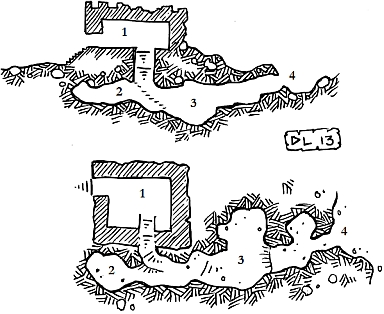 The Bunker Tower
A militarized clan of Fellows live on and around this pre-revolution military bunker in a collection of sturdy buildings organized in an efficient grid pattern. The Fellows build most of these structures from the ruins of other buildings, carting brick, concrete, wood, et cetera from other locations. The clan maintains a high degree of alertness not only due to the bunker’s sacred proximity, but also because of the large number of predatory chemical worms in the area.
1. Superstructure: While the exterior of the superstructure shows signs of damage from the elements and battle, it remains solid and sealed tight. Inside the single-storey building are offices for administrative and security personnel, all long abandoned in haste. A cargo elevator leads down to the caves beneath the superstructure.
2. Munitions: This section of the caves was converted for munitions storage. Duraflex walls and ceilings form storage units in four rows. This particular facility stores mag pistols, mag rifles, ammunition, repair kits, and other firearms accessories. It also has a cache of grenades of various types.
3. Flooded Cave: The chemical pond’s high acid content eroded a narrow but passable tunnel through surfrace strata into the caves, flooding the lowest lying areas in the process. Chemical reactions have turned the air through the cave system into a toxic haze. The water itself is highly corrosive, and predatory chemical worms thrive in this environment.
4. Chemical Pond: A bomb crater to the rear of the superstructure has long since filled with water, and deadly toxins and acids in the soil have turned the resulting pond into a highly corrosive pool ideal for predatory chemical worms. During infrequent dry spells, much of the pond evaporates, leaving a thick, poisonous sludge.
Chemical Worm (for Stars Without Number):
Armor Class: 7
Hit Dice: 1
Attack Bonus: +2
Damage: 1d4 bite
No. Appearing: 10-40
Saving Throw: 15+
Movement: 15 ft., swim 15 ft.
Morale: 8
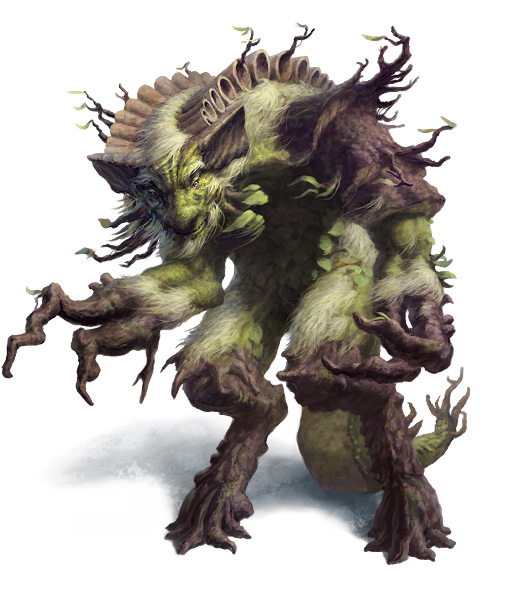
Chemical worms grow to about the length of a man, reaching a thickness approximate to a man’s thigh. They are sandy brown in color with bloodred heads and a quadripartite jaw sporting vicious fangs. They are invulnerable to almost all poisons and acids, and they can survive in anerobic environments for long periods of time. In addition to its bite, a chemical worm can spray a scalding fluid at its prey. The spray is produced by a reaction between two chemical compounds, hydroquinone and hydrogen peroxide, stored in separate reservoirs in the worm’s throat, and then mixed when needed in a third chamber with water and catalytic enzymes. Heat from the reaction brings the mixture to near the boiling point of water and produces gas that drives the ejection. The chemical worm’s spray inflicts 1d8 points of damage in a 15-foot wide fan.
Tags: monsters, Stars Without Number, The Grand Original Map Contest
 Matt Jackson over at Lapsus Calumni is running a