Archive for the ‘ RPG ’ Category

E Is for Elanor

Whew! Week one of the blogging challenge is just about done. I was doing okay until day five. I didn’t start working on this post until 9:00 p.m. last night, which, after the week I’ve had, is a bit after my bedtime. Still, with drooping eyes, with throbbing temples, I plodded through, Pandora playing a mix of 50s doo-wop, reggae, and 80s new wave.

I’ve been using A to Z as an excuse to get more writing done for Tiamat’s Throne, focusing on the different planets in the sector conquered by the dragons. This post is supposed to be a more detailed write-up of Elanor, similar to what I’ve done recently for Castor and Deneb. Alas, this was not to be. Instead, you get this, namely me writing about how I come up with planet descriptions.

Here’s the big secret: It’s almost entirely random, using the various tables found in the Stars Without Number rules. I tweak things a bit here and there, but pretty much what you end up reading about is what I generated with my dice. For example, here’s the very-rough-draft-indeed version of Elanor:

Atmosphere: Breathable mix
Temperature: Temperate
Biosphere: Human-miscible
Population: Tens of thousands
Tech Level: 3
World Tags: Heavy Mining, Altered Humanity
Reason for Colonization: Research outpost
Original Government: Autocracy
Current Government: Republic
Traits: Resigned, Warlike
Conflict: Land – The land is just a proxy; one side simply wishes to destroy the other, and so uses the dispute as an excuse for conflict. Both sides are confident that their diplomats can force a concession, and are holding back from war at present. Outsiders are vigorously recruited for the struggle for possession.

What I need to do now is take this raw, mostly random data and make it fit into Tiamat’s Throne. I say “mostly random” because I added the Altered Humanity tag without it coming up via a die roll. Elanor is the planet where one is most likely to encounter the malgrandegulos, the gengineered dwarf-like race created by the Eugenics Commissars for mining work.

What I think is most interesting about Elanor is the comparatively small population and the nature of the conflict on the planet. I’m envisioning a few, mutually hostile city-states. Each city-state controls an important mining interest and associated territory, but as resources in the territory become scarce, pressure to expand and remain profitable leads to conflict over unclaimed land. Diplomats from the various city-states vie against each other for negotiated advantages, preferring bloodless politics to the sort that comes out of the barrel of a gun.

The one thing I’m not sure I like about Elanor is the low tech level. Tech level 4 is imperial standard. Elanor’s lower tech level greatly limits her ability to engage in interplanetary travel and trade. This seems odd for a planet whose natural resources are vital to imperial interests. Perhaps this can be explained away by including an imperial fleet stationed off-world but still in Elanor’s system. The malgrandegulos mine using tech roughly equivalent to what we have today, and imperial agents take care of the shipment to extraplanetary markets.
D Is for Deneb

Deneb was founded by colonists from Castor in the early decades of the Homeland Fellowship’s presence on that world. Schism within the Order of Peers, one of the knightly orders, over membership criteria threatened to disrupt the peace on Castor. Powerful traditionalists within the Order of Peers objected to membership being opened to those not descended from the Homeland Fellowship’s first families. Rather than risk conflict within the Order, the traditionalists were granted a charter to colonize Deneb, a frigid world locked in an endless ice age. The result was a military dictatorship wherein positions of power and influence were reserved for first family aristocracy. The Order established family domains near Deneb’s equator where they could exploit the planet’s limited resources of arable land and liquid water (and within the habitable zone that Deneb’s dangerous species live, such as the Denebian ripper).

As the decades passed, factionalism among the traditionalists increased. The consequent civil war wreaked havoc on the family domains’ resources. Deneb is not a world that easily facilitates stockpiling surpluses of food and other materials. The need for imported resources led to intense bidding among the families with mercantile powers that had the contacts and means to fill the wartime needs in exchange for access to Deneb’s rich heavy metal resources. Collusion among these mercantile powers gradually shifted the balance of power on Deneb until the Order was all but ousted.

Whether the Order could’ve recovered political power was a question left unanswered by the arrival of the dragons. Deneb fared better than many other worlds during the Rage. Much of Deneb’s infrastructure was deep underground to be insulated from the world’s crippling cold. The long isolation after the Age of Fire proved more disastrous. Much of Deneb’s population died from hunger and disease. Isolated pockets survived and remained civilized. Other communities fractured, and the people moved deeper underground. These cave-dwellers descended deeper into madness and depravity during with each successive generation.

As Tiamat consolidated her control over the sector and order was restored, materials were needed for reconstruction and industry. Deneb became a valuable resource again. Four corporations received charters to restructure Deneb: Daybreak Organization, a major player in fuel refining; Terra Prime Ring, the sector’s heavyweight in planetary mining; the Imani Company, a cutting-edge metallurgical business; and Outertech Syndicate, the Empire’s foremost producer of heavy weaponry. Providing security for all four is Magnus Union, a security corporation whose name has become synonymous with ruthlessness.

Remnants of the Order found themselves cast as figureheads in the corporate feudalism established on Deneb under these imperial charters. Aristocrats who can trace their lineage back centuries now act as company subsidiary executives responsible for fulfilling work quotas established by corporate headquarters. Standing on top of the feudal pyramid is the feared Magnus Union.

At present, most members of the Order believe their place in the planetary pecking-order is justified. The Order’s aristocracy has resurrected its ancient forms of dress, and they present a bizarre spectacle as they obsequiously demand respect and honor for the old forms and pomp. When not engaged in the business of filling imperial demands, the aristocracy participate in ceremonies, tournaments, banquets, et cetera, almost entirely conducted in Latin.

Deneb’s highly restrictive laws, culture of corporate paranoia, and the ongoing subjugation of the Order make most Denebians cruel and envious. The pain and suffering of others is a source of amusement, and public humiliation and a lack of gentility are main features of Denebian entertainment. Those perceived to accumulate wealth or power too easily become targets. Scandals, real or fabricated, occur frequently, and they have become a common method of advancement in business and social circles.

Deneb also has a sizeable population of outcasts, most being the descendants of cave-dwellers. Called krimas, these outcasts are almost invariably dangerous. Many have developed bizarre hereditary deformities that warp both body and mind. In the deeper caverns, the krimas barely qualify as human, but instead have mutated into sightless, savage cannibals.

Deneb at a Glance
Population: 89,500
Atmosphere: Breathable
Climate: Cold
Government: Feudalism
Tech Level: 4

Magnus Union
Attributes: Force 6, Cunning 7, Wealth 4
Hit Points: 38
Assets: Force/Postech Infantry 4, Cunning/Organization Moles 5, Cunning/Party Machine 4, Wealth/Bank 4
FacCreds/Turn: 6
Tags: Secretive, Planetary Government (Deneb)
Tag Effect: Magnus Union’s permission is required to buy or import assets marked as needing government permission. All assets purchased by this faction automatically begin Stealthed.
Homeworld: Deneb
Goal: Destroy the Foe: Destroy a rival faction.

April 4th, 2013  in Product Development, RPG 1 Comment »

B Is For Bellatrix & Brutos

Bellatrix was founded as a gengineering research outpost by the Meteor Alliance, a long-defunct corporation. The planet’s minimal biosphere was believed to be an ideal location for genetic manipulation of microorganisms, including the wide variety of alien microbial life that still manages to thrive in the planet’s waterless, inhospitable conditions.

When the dragons invaded the sector, they had little reason to focus much attention on Bellatrix. The population was small and inoffensive. As the rage of the dragons gave way to the Tiamat’s supremacy, Bellatrix suffered only brief violence. The Meteor Alliance was dismantled, and for centuries nothing lived on Bellatrix except alien microbes. During the Age of Ashes, Duke Níðhöggr of Ylli permitted the establishment of a colony on Bellatrix under the auspices of Highbeam Multistellar, a new gengineering outfit with corporate offices on Níðhöggr’s throneworld. (For an example of Bellatrixian gengineering applied to military purposes, check out the plague fungus.)

Vast resources were funneled to Bellatrix to build the four amazing flying cities that circle the plant’s equator in the stratosphere. Corporate structure on Bellatrix also defines the planet’s government, but promotions are highly competitive, based on technical and research expertise, and occur every six years. Selections for positions are made by the corporate offices on Ylli, and competition is fiercely cutthroat.

Visitors to Bellatrix need to be aware of the world’s restrictive laws. The wheels of corporate bureaucracy drive Bellatrix’s regulatory culture, albeit at a grindingly slow pace. Since there is no legislative process on Bellatrix outside business meetings and boardrooms, the maze of regulations changes frequently, often with little apparent rhyme or reason.

Bellatrixian society is divided into three castes. At the top of the social pyramid are Highbeam Multistellar executives, their families, and their staffs. Below this upper crust are the technicians, scientists, and researchers who work for the corporation, as well as members of skilled professions who work on Bellatrix with company sanction. The Brutos comprise the largest and lowest caste.

Brutos have been gengineered to perform the bulk of the unskilled and semi-skilled labor on Bellatrix. They work as janitors, drivers, loaders, et cetera. Brutos are human, but they have a decidedly Neanderthal-like appearance. They were designed for physical strength and endurance, as well as for subpar intelligence and heightened docility.

The latter traits, however, proved maladaptive, and subsequent generations of Brutos have experienced genetic shifts leading to increases in intelligence and independence. While Bruto intelligence still averages less than “pure strain” human norms, exceptional Brutos reach human median IQ.

About a decade ago, these changes in Bruto DNA culminated in the Bruto Collective. Bruto workers in the anti-gravity substructures of Bellatrix’s flying cities seized control of vital systems and threatened to wreak havoc if their demands weren’t met. Tense negotiations and scattered incidents of violence ended with Brutos being granted limited property rights and minimal stock options by the Board of Directors. The Bruto Collective gained recognition as a worker’s organization.

Bellatrix at a Glance
Population: 215,000
Atmosphere: Composed mostly of argon and neon.
Climate: Tropical to temperate
Government: Corporatism
Tech Level: 4

Bruto Characters: Any character from Bellatrix can be a Bruto. Brutos are humans, but a Bruto character must have a 13 or better in Strength and Constitution and less than an 11 in Intelligence. Normally, a character may have a number of stowed items equal to their full Strength score. Brutos are built for portage. Treat a Bruto’s Strength as 2 point higher for purposes of encumbrance.

The Bruto Collective
Attributes: Force 4, Cunning 1, Wealth 3
Hit Points: 15
Assets: Force/Zealots 3, Wealth/Union Toughs 2
FacCreds/Turn: 3
Tag: Warlike
Tag Effect: Once per turn, this faction can roll an additional d10 when making a Force attack.
Homeworld: Bellatrix
Goal: Commercial Expansion: Destroy three Wealth assets of rival factions.

The Bruto Collective is a high-muscle, aggressive labor union. Its leaders have some pull in the corporate government of Bellatrix, and its members work in numerous capacities related to maintenance, shipping, et cetera. A Bruto Collective strike can shut down corporate business, and the membership has the muscle to cause some rough damage if provoked.

April 2nd, 2013  in Product Development, RPG 1 Comment »

A Is for Artists Against Tyranny!

Tyrants and those who support them have a long history of both mistrusting and using artists. Go all the way back to Plato’s The Republic for recommendations about censoring religious myths, poetry, song, et cetera. (Aside: I am thoroughly convinced most to all of The Republic is correctly understood as an extended exercise in philosophical irony.) In more recent times, oppressive regimes have murdered poets (Federico Garcia Lorca, for example) and persecuted musicians (Johnny Clegg, for example). Tyranny’s sympathizers also have used art to waged campaigns of slander against those who oppose tyranny (for example, Rolf Hochhuth’s The Deputy, discussed here and here)

On the macro scale in Tiamat’s Throne, the campaign’s space sector groans under the claw of Tiamat and her dragon dukes. Since the sector is a big place, and even a starship-sized dragon has limited reach, the amount of tyranny varies from place to place, but every world suffers to some degree. On Adhara, the planet’s vibrant arts community has attracted special attention.

From my rough-draft document:

“The vibrant arts communities have proven problematic in the past. Artistic expressions of contempt directed against Apophis and Tiamat resulted in violent reprisals. Since those dark days, Adharan republics have instituted severe restrictions on freedom of expression. Political speech and art is heavily regulated, and the penalties for underground art are particularly harsh. This conflict between a famous cosmopolitan arts culture and repressive controls on artistic expression is a sore spot with many Adharans.

“The ‘art police’ lack the personnel and expertise to adequately enforce speech laws in a few economically depressed wards. Radical underground artists run illegal presses and traveling galleries among the underclasses of these areas. Missionary priests associated with the Domini Canes also aid and abet these criminal artists.”

In these two paragraphs, I have the hints of three different Stars Without Number factions: a renegade artistic assocation, the “art police”, and the Domini Canes. Let’s stat up the second of these.

Ministry of Arts
Attributes: Force 5, Cunning 6, Wealth 3
Hit Points: 29
Assets: Force/Elite Skirmishers 2, Cunning/Cyberninjas 3, Cunning/Informers 1,
Wealth/Lawyers 2
FacCreds/Turn: 4
Tag: Secretive
Tag Effect: All assets purchased by this faction automatically begin Stealthed.
Homeworld: Adhara
Goal: Blood the Enemy: Inflict 14 hit points of damage on an enemy faction.

The Ministry of Arts has two faces: one public, the other covert. Everyone knows about the covert face, but only the brave or foolish talk about it too much. The public face of the MoA operates art museums and holovid stations, sponsors sanctioned artists and art shows, and otherwise presents Empire-friendly artistic activities. The MoA’s covert face operates in secret, monitoring Adhara’s underground arts and entertainment. Artists who are judged too subversive are targeted for corrective action.

P.S. For an example of Adhara’s native fauna, check out the ghost moth.

April 1st, 2013  in Product Development, RPG No Comments »

Heather Donohue Versus Helen Hayes

One of the elements of an effective horror story is a sympathetic protagonist. The person beleaguered by the Forces of Evil needs to be a sort of person that the audience wants to prevail. For example of what I’m not talking about, consider the foul-mouthed crybabies in The Blair Witch Project. Even before the terror started, I was anticipating the student filmmakers’ demises. If you write a horror story, and the audience (in this case me) ends up rooting for the Forces of Evil, I feel as if you’ve perhaps missed something important.*

In contrast (and, yes, it’s not really a horror film), consider 1970’s Airport. Most of the film’s running time is spent not on the disaster but rather focuses on the hopes, dream, conflicts, and disappointments of the ensemble cast. By the time the bomber (Van Heflin in his final film role) jumps into action, the audience has been given plenty of reasons to not want the villain to succeed. The characters threatened are sympathetic, even while they are not without their flaws.

When designing a scenario for a horror RPG session, there’s plenty of good advice out there. (See, for example, “Horror in Roleplaying” by Ernest Mueller.) Some of this advice talks about how to use the players’ investment in their characters as a spur to create dread. In other words, the PCs are sympathetic characters that the audience (meaning the players) wants to succeed. As the scenario’s designer and GM, I also need to keep in mind the need for sympathetic NPCs. The horror story I’m designing and asking my players to participate in needs to have an ensemble cast featuring more than just the Forces of Evil and miscellaneous stock characters.

Many Call of Cthulhu scenarios handle this task admirably by providing the GM with an assortment of NPCs, some good, some useful, and others evil. Time is then given in the scenario for the players’ characters to encounter and interact with these NPCs, thus modeling the movie format of Airport: introduce the main actors so that the audience’s opinions and expectations for their roles can be established.

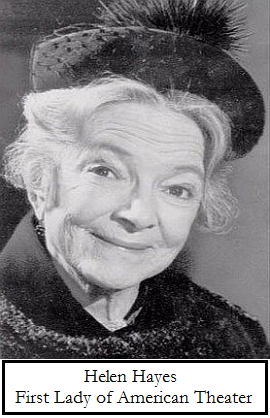
Should the Forces of Evil kill The Blair Witch Project‘s Heather Donohue? Yes, please. Should the Forces of Evil kill Airport‘s Helen Hayes? Never! What’s the difference between the two ladies? Helen Hayes portrays a sympathetic character that the audience wants to live.

*Of course, this might just say a whole lot more about me and my tolerance for foul-mouthed crybabies.

March 19th, 2013  in RPG No Comments »