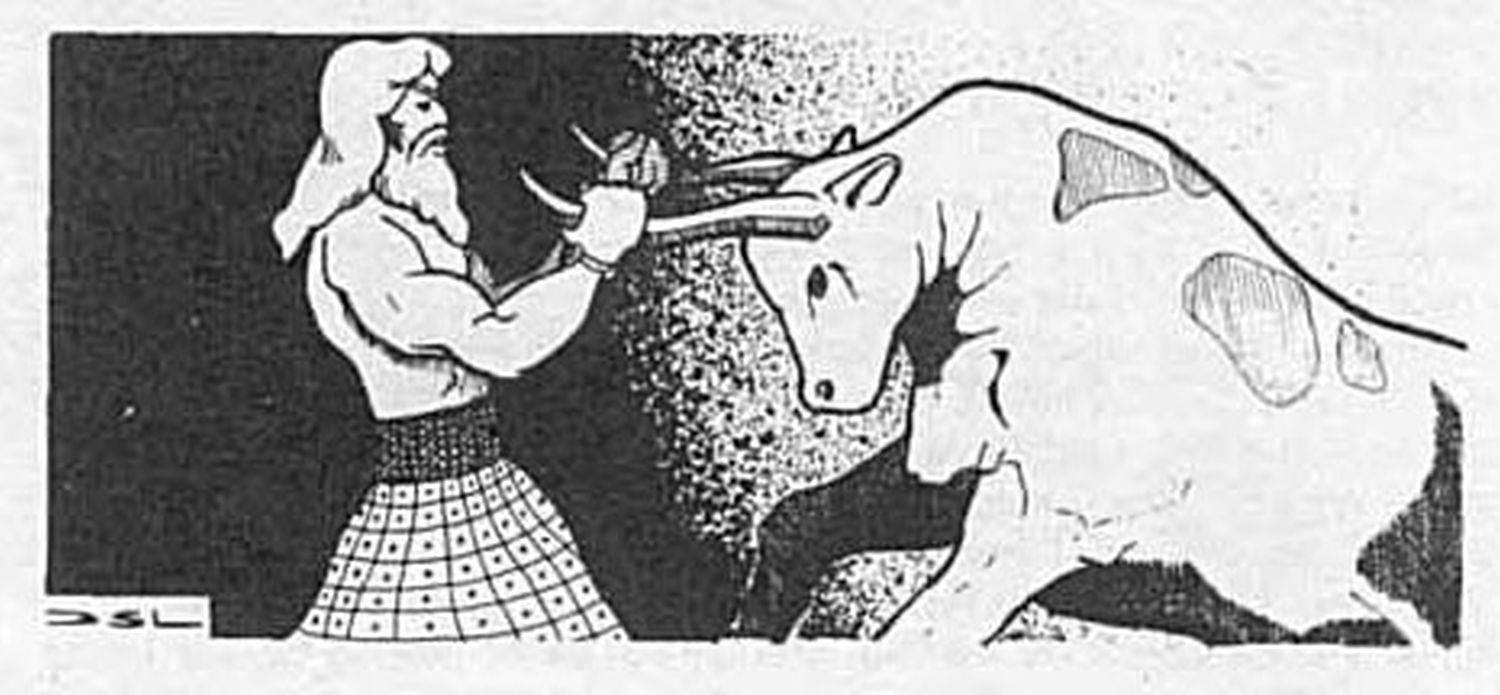
The Celtic Mythos, Part 1

Well, there’s some semi-big news ’round about here. First, I started a The Four Color Hack campaign yesterday. It’s a small group, including one player who’s only in town every two months or so, but we had fun. Three of the four players had sat in on my very first playtest, back when the combat system said it emulated the fastly furious action of comic books, but failed miserably to do so. I’m happy to report that the terrible slog that was TFCH combat back then is a thing of the past. That’s not to say we didn’t hit some rough patches, and I did get some good feedback from players, but I think most if not all of the problems were due either to me not explaining things well or to the system being unfamiliar to the players.

Speaking of The Four Color Hack, I’ll almost certainly be uploading the necessary files to DriveThruRPG this week so that TFCH can go from PDF only to print-on-demand. I’m also trying to teach myself how to use Scribus well enough so that I can offer Demi-Human Adventurers for Swords & Wizardry White Box as another print-on-demand product. Huzzah.

But, wait, there’s more in the news department. Ludi Fabularum: Games of Stories, the 16-hour course I’ve developed, kicks off tomorrow with my first group. I’m using Skill Centric Role Play by David Holmes and Hero Kids by Hero Forge Games along with a student workbook of my own in order to teach skills related to writing, editing, teamwork, et cetera. Interest in both Ludi Fabularum and my services as a private tutor seem to be picking up.

Unfortunately, I’ve had more than one prospective client opt for not hiring me due to my fee. Tutoring isn’t a side job for me. I’m trying to build it into my primary source of income, which means meeting a minimum income. It bums me out having to tell a prospective client that I can’t afford to lower my fee below X. I mean, I love teaching, and I want to help, but at the end of the day I’ve got bills to pay just like everyone else.

To help, I’ve set up a GoFundMe to raise money for scholarships for Ludi Fabularum. I’m shooting for $2000, which is enough to offer about two dozen partial scholarships for students. You can read more about this fundraiser at this link.

And now to continue pillaging the AD&D Deities & Demigods for things to convert to D&D 5E. Today is the first of two posts that update material from the Celtic Mythos for use with D&D 5E.

Cauldron of Scrying
Wondrous item, very rare (requires attunement by a cleric with the Nature domain or a druid)

This iron pot (weight 10 lb.) functions only when filled with a gallon of fresh blood from a beast. For an hour after the cauldron of scrying is filled with blood, you can cast the scrying spell (save DC 17) while touching the cauldron. The cauldron of scrying acquires different properties if filled with different types of blood.

Cauldron of Mind Reading. If the cauldron is filled with a gallon of fresh blood from an aberration or monstrosity, you can use an action to cast the detect thoughts spell (save DC 17) while you are scrying with the cauldron of scrying, targeting creatures you can see within 30 feet of the spell’s sensor. You don’t need to concentrate on this detect thoughts to maintain it during the duration, but it ends if scrying ends.

Cauldron of Telepathy. If the cauldron is filled with a gallon of fresh blood from a giant or humanoid, you can communicate telepathically with creatures you can see within 30 feet of the spell’s sensor. You can use an action to cast the suggestion spell (save DC 17) through the sensor on one of those creatures. You don’t need to concentrate on this suggestion to maintain it during its duration, but it ends if scrying ends. Once used, the suggestion power of the cauldron of scrying cannot be used against until the next dawn.

Cauldron of True Seeing. If the cauldron is filled with a gallon of fresh blood from a fey, you have truesight with a radius of 120 feet centered on the spell’s sensor.

Tathlum
Wondrous item, very rare (requires attunement)

The tathlum is a weapon of war made from the severed head of a creature. The tathlum‘s creator coats the severed head with lime taken from the creature’s territory, doing so seven times and allowing each coat to dry before applying the next one. The tathlum is thrown like a thrown weapon with a range of 20/60. Against creatures of the same type as the creature from which the severed head was taken, the creature hit by the tathlum takes 12d6 necrotic damage and is blinded for 1 minute. A creature blinded by this spell attempts a DC 15 Constitution saving throw at the end of each of its turns. On a successful save, it is no longer blinded. The tathlum functions once per day.

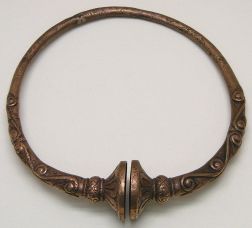
Torc of Protection
Wondrous item, rare (requires attunement)

When you wear this neck ornament consisting of a band of twisted metal, you gain a +1 bonus to AC and saving throws. The torc of protection does not function if you wear metal armor or use a shield made of metal.

Torc of the Gods
Wondrous item, legendary (requires attunement)

This magical device functions like a torc of protection. Additionally, you can cast both polymorph (Wisdom save DC 17) and shapechange once each per long rest while wearing the torc of the gods. The torc of the gods does not function if you wear metal armor or use a shield made of metal.

“I’ll Meet You By the Third Pyramid.”

First, a big “Thank you!” to everyone who made the Spes Magna Games 25th Wedding Anniversary a big success. May was my best month for sales so far this year by almost two to one. Huzzah.

And now, once again, I pillage the AD&D Deities & Demigods for things to convert to D&D 5E. This time, I travel back to ancient Mesopotamia to visit Dahak, the three-headed dragon spirit of death, and Gilgamesh.

The result is two rather beefy stat blocks, so rather than squeeze all of that beefiness into a blogpost, I’ve formatted it into a PDF that you can download by clicking here.

June 1st, 2018  in RPG No Comments »

Elements of Danger

Endangered innocent bystanders have long been a staple of comic book action. All those civilians caught in the middle of that alien invasion or smackdown between titans serve certain narrative functions. They help create a sense of danger, of empathy. They give villains a convenient way to distract the heroes. Who can forget this evil exchange?

General Zod said, “This ‘super-man’ is nothing of the kind; I’ve discovered his weakness.”

“Yes?” said Ursa.

“He cares. He actually cares for these Earth people.”

“Like pets?”

General Zod said, “I suppose.”

In big team battles against earth-beating threats, getting innocent bystanders out of the way also gives less powerful heroes something to do while the group’s heavy hitters tackle the main menace. For example, Thor and Hulk go toe-to-toe with the Leviathan while Black Widow and Captain America race to get the civilians to safety.

One way The Four Color Hack handles this sort of action is through the use of Elements. At their most basic level, Elements serve to grant advantage or impose disadvantage, depending on the narration of the action. Consider Cloud of Dust as an Element. A hero could use this Element to hide his movement, thus gaining advantage on an attempt to remain hidden. In a similar way, the Element could impose disadvantage on a hero’s energy blast since he can’t quite see his target.

A more serious Element, however, can have stats, pretty much as if it were a villain. Consider this example:

Huge and Fiery Explosion
Level 2 Element

Hit Points: 16 (2 Vigor)
Base Damage: 1d6
Powers: Collateral Damage d6

On this Element’s turn, the Editor should describe how someone is imminent peril. He then asks a hero, “What do you do?” The hero’s response to the peril is treated as defending against an attack from the Element. Should the hero fail, the Element’s damage (2d6) represents the level of harm the hero faces. Since hit points represent more than physical damage, proximity to the threat is not particularly important. The Element can be “fought” during a hero’s Panel, but the Element’s hit points are not its resistance to actual damage. Instead, they represent the level of danger to bystanders, buildings, et cetera. Once the Element has 0 hit points, it is no longer a threat.

Imagine a player running the fiery speedster Hot Flash in a scene like that shown in the picture above.

Editor: “The fireball expands with a roar and a blast of heat, lifting vehicles into the air. Hot Flash, you see a man behind the wheel of a truck, arms locked, mouth open in a scream, as his vehicle flies into the air. What do you do?”

Hot Flash: “Faster than the eye can see, I race forward, running up bits of debris as if they were stairs toward the cab of the truck, and then a smash through a window and out the driver side door, carrying the man to safety.”

Editor: “Excellent. Roll DEX with a +1.” (The +1 comes from the difference between the Element’s level and Hot Flash’s level, and it is a penalty in TFCH’s roll-low system.)

(A die clatters on the table.)

Editor: “Ooh. That’s a failure. You race up the bits of debris and smashes through the window to pull the man to safety, but not without being pelted with shards of street, glass, and other bits of shrapnel.” (More dice clatter.) “You take 9 points of damage. Your turn. What do you do now?”

Hot Flash: “After leaving the man in an alley, I race back, unconcerned with these minor cuts. I use my Fire Control to funnel the flame from the explosion up into the air where I hope it’ll dissipate harmlessly.”

Editor: “Clever. Roll INT with a +1.”

(Clatter, clatter!)

Hot Flash: “A one! Critical success!”

Editor: “Roll for double damage.” (Hot Flash scores 19 points of damage.) “Excellent! You’ve defeated the fireball. Narrate the results, please.”

May 31st, 2018  in RPG No Comments »

In Days of Old When Knights Were Bold

A few days ago, I posted D&D 5E stats for the sacred bundle and the thunder bird from the AD&D Deities & Demigods. Today, I return that tome and venture into the Arthurian Mythos for inspiration.

Also, to digress just briefly, it’s the last days of the Spes Magna Games 25th Wedding Anniversary Sale. Huzzah!

Carnwennan
Weapon (dagger), legendary (requires attunement)

White leather wraps this finely wrought dagger’s hilt. You gain a +1 bonus to attack and damage rolls made with this magic weapon. Against evil creatures that cast spells, Carnwennan deals an extra 2d6 slashing damage. When this dagger is held, it shrouds you in shifting shadows. Attackers have disadvantage on attack rolls against you, although attackers who do not rely on sight are immune to this effect.

Excalibur
Weapon (longsword), artifact (requires attunement by a good fighter, paladin, or ranger)

This remarkable blade belongs to the Lady of the Lake, an extremely powerful seelie queen. Its most famous wielder was King Arthur.

Excalibur is a magic, sentient longsword that grants a +3 bonus to attack and damage rolls made with it. It has all the powers of a sword of sharpness (DMG, p. 206).

Random Properties. Excalibur has the following random properties.

* 1 minor beneficial property
* 1 minor detrimental property

Leadership. While Excalibur is on your person, you have advantage on Charisma checks and saving throws.

Sentience. Excalibur is a lawful good weapon with an Intelligence of 12, a Wisdom of 16, and a Charisma of 15. It has hearing and normal vision out to a range of 60 feet. The speaks, reads, and understands Common and Sylvan. Excalibur has the Destiny Seeker special purpose. It is convinced that it and its wielder are destined to rule justly and wisely.

Destroying Excalibur. It does not seem that Excalibur can be destroyed, but it can be removed from the Material Plane by slaying its wielder and tossing it into a lake within a pristine, sylvan setting. The Lady of the Lake then takes the sword back to her realm.

Excalibur’s Scabbard
Wondrous item, artifact (requires attunement by a good fighter, paladin, or ranger)

Decorated with jewels and skillful embroidery, Excalibur’s Scabbard also belongs to the Lady of the Lake.

The scabbard will hold only Excalibur. No other blade can be sheathed in it. Anyone who attempts to sheath a weapon other than Excalibur in the scabbard must make a DC 15 Charisma saving throw. On a successful save, the wielder takes 3d6 radiant damage, and the offending weapon is thrown 1d6x10 feet in a random direction. On a failed save, the wielder takes the same damage, and the offending weapon vanishes into the realm of the Lady of the Lake.

While carried, the scabbard protects its owner, who gains resistance to piercing and slashing attacks and to necrotic damage. The owner also gains advantage on saving throws against effects that cause necrotic damage.

Random Properties. Excalibur’s Scabbard has the following random properties.

* 1 minor beneficial property

Destroying the Scabbard. It does not seem that the scabbard can be destroyed, but it can be removed from the Material Plane by slaying its owner and tossing it into a lake within a pristine, sylvan setting. The Lady of the Lake then takes the scabbard back to her realm. If Excalibur is not with the scabbard when this occurs, then Excalibur vanishes from its location and returns to the Lady.

Merlin’s Staff
Staff, artifact (requires attunement by a druid or wizard)

Merlin’s Staff appears to be nothing more than a snarled length of wood, crudely sanded and devoid of decoration or lacquer. It was wielded by Merlin, perhaps the most powerful spellcaster who ever lived. Stories vary on its origin. Some say Merlin made it himself, while others claim the staff was a gift to Merlin from his infernal father.

Regardless, this artifact acts as a staff of striking (DMG, p. 203) that functions up to three times per long rest as if the wielder had expended 3 charges. (Merlin’s Staff itself has no charges.)

Random Properties. Merlin’s Staff has the following random properties.

* 2 minor beneficial properties
* 1 major beneficial property
* 1 major detrimental property

Spell Absorption. When holding the staff, you have advantage on saving throws against spells. You can use your reaction when another creature casts a spell that targets only you. If you do, Merlin’s Staff absorbs the magic of the spell, canceling its effect and gaining a number of points equal to the absorbed spell’s level. You can use a bonus action when you cast a spell to expend a number of points equal to the level of the spell you’re casting. If you do so, you do not expend that spell slot. Merlin’s Staff can never have more than 18 points stored at any given time. If absorbing a spell would cause Merlin’s Staff to exceed this limit, the spell is not absorbed and takes effect normally.

Spell Storing. Merlin’s Staff can store up to 5 levels worth of spells at a time. Any creature can cast a spell of 1st through 5th level into the staff by touching the staff as the spell is cast. The spell has no effect, other than to be stored in the staff. If the staff can’t hold the spell, the spell is expend without effect. The level of the spell determines how much space it uses. While holding Merlin’s Staff, you can cast any spell stored in it. The spell uses the slot level, spell DC, spell attack bonus, and spellcasting ability of the original caster, but is other treated as if you cast the spell. The spell cast from the staff is no longer stored in it, thus freeing up space.

Destroying the Staff. Merlin’s Staff can be destroyed by taking it to the Shining Forest on Olympus. There the staff must be planted and watered with seven gallons of holy water from each the Sacred Springs found on the Seven Heavens, the Twin Paradises, Elysium, and the Happy Hunting Grounds. This opens a portal to the infernal realm ruled by Merlin’s father, after which the staff must be ground to sawdust beneath the eighty-one wheels of the Hellgrinder.

May 30th, 2018  in RPG No Comments »

The Sinisters: Amok

Introducing Amok for The Four Color Hack. Amok is one of the Sinisters, a villain group I originally called the Sinister Six. Back then, Amok was known as Ogre.

Amok
Level 6 Villain

Quote: “Amok smash!”
Real Name: Ian Caldwell
Identity: Public
Place of Birth: Los Alamos, New Mexico
Height: 7 ft.
Weight: 650 lb.
Eyes: Glowing yellow
Hair: None

Hit Points: 38 (6 Vigor)
Base Damage: 2d8
Powers: Atomic-Powered Body d10 (6 protection), Devotion to Volt d10, Super-Strength d12

Young Ian Caldwell, up-and-coming high-school football player, always seemed to have more muscle than brains, but he had a good heart. His father, Sean, had been a constable until his death in the line of duty, and Regina, Ian’s widowed mother, did her best for her son. Ian understood loyalty, whether to his mother, to his team, to his friends. After his junior year at Los Alamos High School, Ian got a summer job driving a truck for Clean Sands, a company that handled waste transport and disposal. The money was good, and Ian was so proud to be able to help his mother.

Unfortunately, Clean Sands fell short of the up-and-up. A blown tire put Ian’s truck in a ditch, and drums full of illegal toxic waste ruptured. Ian crawled through this waste, dragging his co-driver away from the wreck. Both men suffered terrible chemical burns atop the injuries suffered in the crash. Worst of all, the toxic waste interacted with latent, mutated genes in Ian’s DNA.

Ian Caldwell, loving and loyal, transformed into a hulking brute driven by fear and rage. He tore his way free from the military hospital into which he been admitted after his body had started to change. During his rampage across the military base, the military police vehicle transporting Regina to Ian’s location in the hope that Ian’s mother could calm him down got too close. Without realizing Regina was in the vehicle, Ian lashed out. The vehicle was destroyed, and all of its occupants died. Ian escaped into the New Mexico wilderness.

Volt, leader of the Sinisters, found Amok some time later. The tortured youth responded to Volt’s calm, subtle manipulation. Now known as Amok, Ian serves Volt and the Sinisters with the same devotion he once served his family and football team.

Amok possesses immense strength. He can lift 25 tons, and his physical attacks are devastating (2d8+1d12). His Atomic-Powered Body is highly resistant to injury, and Amok never seems to get tired. He also recovers from injury at an accelerated rate. Amok has a child-like intelligence, but his intense Devotion to Volt makes him difficult to manipulate.

May 29th, 2018  in RPG No Comments »