“Yes, We Can!”

Some time next week, I’m relaunching my Patreon site as a support platform for The Four Color Hack. I’ll be writing up new villains, new heroes, new Elements, city details, situations that can be used for adventures for your game’s heroes, et cetera. All of this will revolve around Penance, Texas. What is Penance, Texas, you ask? Read on.

Welcome to Penance, Texas. Penance with its population of 455,000 sits on the Gulf Coast in the South Texas region. Penance’s history reaches back to the early 16th century, but long before the Spanish settled the area, the Kómaháyika lived in the area. Little is known of these people except that they had an evil reputation among both the Karankawa and the Spanish. Long-time residents of Penance say that whatever the Kómaháyika did must have cursed the ground the city stands on, for it seems as if Penance’s yesterday and today have always been caught in a struggle between evil and good….

As a setting, Penance, Texas, combines superheroics with elements from genres closer to true crime and Lovecraftian horror. Material released via Patreon will fall into the categories of The City, The Supers, The Scenarios, and The Rules. Patrons can choose from three tiers: $1 a month to be a Defender, $3 a month to be an Avenger, and $5 a month to be a League Member. Each tier includes Patron-only access to PDFs written specifically for the Patreon site. In short, Defenders get The Supers PDFs, Defenders get that and The Scenarios PDFs, and League Members get everything, plus other perks, such as getting me to write specially requested villains, et cetera.

Speaking of The Rules for TFCH, the ones for creating villains don’t have to be used for just villains. They can be used to create just about anyone or anything that the heroes may encounter, and that includes heroic allies.

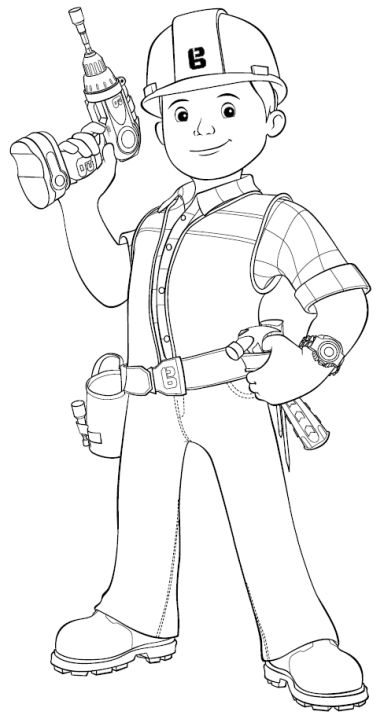
The Builder
Level 3 Heroic Ally

Quote: “Can we fix it?”
Real Name: Bob (last name unknown)
Identity: Secret
Place of Birth: Somewhere in the United Kingdom
Height: 4 ft. 8 in.
Weight: 90 lb.
Eyes: Blue
Hair: Brown

Hit Points: 16 (3 Vigor)
Base Damage: d6
Powers: Machine Control d10, Telekinetic Drill d8, Tool Belt d8

Background: Little is known about Bob’s background. Based on his accent, he’s probably from somewhere in the United Kingdom, mostly likely from Birmingham, England. He’s been an active superhero for a few years, which is remarkable primarily because of his age. Bob can’t be much more than 10 or 11 years old. Who his parents are, where he goes to school, et cetera, are questions about which there is much speculation, but no definitive answers. The media took to calling Bob “The Builder” early on in his heroic career, and the name stuck. As the Builder, Bob does not operate as a traditional crime fighter, although he has tangled with criminals on more than one occasion. Most of the time, the Builder uses his powers to aid first responders in emergency situations.

Powers: The Builder’s main power is his ability to control machines. This ability appears to be psionic in nature, but it could be the effect of super-technology. With Machine Control, Bob can control the movement and operation of mechanical devices. He can even “program” a machine to operate semi-independently by splitting his Machine Control die to create a lasting effect, such as a Debris-Clearing Tractor d8. So far, the Builder has no shown the ability to change the form or function of a machine. He cannot, for example, make a pick-up truck fly like an airplane. The Builder uses a variety of tools, the most prominent being his Telekinetic Drill. With it, he can manipulate up to 5 tons of material within 80 feet. The Builder has used his Telekinetic Drill to repair damaged objects and to jury rig structures, as he did that the time he manipulated a load of PVC pipes to trap an aggressive dog in a PVC Cage d6. The Builder’s Tool Belt holds an assortment of high-tech devices, such as his Climbing Spike Screwdrivers d6 that he uses to scale buildings.

August 23rd, 2018  in RPG 1 Comment »

Q&A About TFCH

Earlier this week, J. Todd Scott emailed me with both praise and questions about The Four Color Hack. What follows is the bulk of my response to Todd, posted with his kind permission:

Question 1: So now that the villain is locked into the d12 bubble, what does that really mean?

Keep in mind that TFCH should always start and end with the narration. So, when the villain’s turn comes around, he’s trapped in a Positronic Bubble d12. That means, among other things, he’s not moving too far. He’s also not attacking through the bubble with effects that can be blocked by a Positronic Bubble. For the sake of clearer examples, let’s assume the villain is Chimera, and that Professor Positron is level 1.

Question 2: How does that d12 come into play?

In addition to the narrative effects, the Positronic Bubble d12 has 7 protection and 1d12 Hit Points. The player rolls 1d12, and gets a 6, so the Positronic Bubble d12 has 6 hit points. Effects blocked by a Positronic Bubble, such as Chimera’s claws, must get through the Positronic Bubble before Chimera can attack anyone else.

Question 3: Let’s say that villain now wants to attack Professor Positron, and Positron (the player) needs to defend and roll under his DEX of 10. Does that d12 affect that defense roll in anyway?

So, that means Chimera has to deal with the Positronic Bubble before he can attempt to tear apart Professor Positron. Since the Positronic Bubble is static, I’d rule it doesn’t get a defense roll unless Positron’s player can narrate something otherwise.

In the first case, Chimera would simply inflict damage against the Positronic Bubble. (And now I notice that Chimera’s base damage is missing from his stat block; grrr.) Most simply, this means Chimera inflicts 2d10 points of damage against the Positronic Bubble (1d10 base damage plus 1d10 Transmorphism). If Chimera does 13+ damage, he destroys the Positronic Bubble. If he does 7 or less damage, he failed to hurt the Bubble at all.

As GM, however, I’d more likely run the exchange like this:

GM: “Chimera’s arms transform into a monstrous crab claws, and he attacks the Positronic Bubble. How do you defend against this attack?”

Professor: “I focus on the Positronic Bubble, attempting to alter its shape so that Chimera’s attack is ineffective.”

GM: “That sounds like some clever quick-thinking. Roll against INT with a +3 because the level difference.”

If the player rolls under INT, Chimera’s attack fails; otherwise, Chimera damages the Bubble, possibly destroying it.

To further wrinkle the situation, Chimera can use his Power Dice pretty much just like a hero can, which brings me to the next question.

Question 4: Similarly, what about a character or villain with a Luck d8 ability or a Precognition d10 ability (like Chimera from TFCH) If Chimera can see effectively into the future, that’s something that could affect the TO HIT roll, rather than the amount of damage, right?

Here we have a six of one, a half dozen of another situation. I’d treat Precognition d10 as 6 points of protection in most situations. If this reduces damage to 0, then Chimera saw the attack in sufficient time to dodge it entirely. The GM could also rule that Chimera’s Precognition d10 enabled him to completely evade the attack. This would downgrade the die one step in terms of how many more times Chimera could just automatically succeed.

Question 5: If I’m the player and I’m rolling to dodge away from a villain with Combat Master d8, how does that die affect my defense roll? And if I’m rolling to hit that villain, how does his Combat Master d8 die affect my attack roll? Or is all this stuff just considered damage reduction?

In general, dice attached to powers don’t affect d20 rolls. The ability to use a Hero Die to achieve an automatic success takes this into account. My goal was to simulate that situation in a comic book where Spider-Man, for example, just can’t be hit. He uses his Amazing Agility against Doctor Octopus, dodging one attack after another, at least for a few panels. Eventually, however, Spider-Man’s luck runs out, and Doc Ock clouts him from behind with a tentacle.

August 22nd, 2018  in RPG No Comments »

Spirits of the Air

And here’s my final foray into into the Chinese Mythos from the AD&D Deities & Demigods. Way back in the day, the spirits of the air were among the few creatures in Deities & Demigods that I ever used as a DM. Here they are for 5E D&D.

These minions of the wind gods can be summoned by them in number of up to 100 every day…. They exist to fight for the gods. (Deities & Demigods, page 41)

Spirits of the Air
Large elemental, neutral

Armor Class 16 (natural armor)
Hit Points 104 (11d10+44)
Speed 30 ft., fly 60 ft. (hover)
Ability Scores STR 23 (+6), DEX 16 (+3), CON 18 (+4), INT 10 (+0), WIS 12 (+1), CHA 11 (+0)

Saving Throws DEX +8
Skills Athletics +10, Perception +5
Damage Resistances bludgeoning, piercing, and slashing from nonmagical attacks
Senses darkvision 60 ft., passive Perception 15
Languages all
Challenge 9 (5,000 XP)

Flyby. The spirit of the air doesn’t provoke opportunity attacks when it flies out of an enemy’s reach.

Actions

Multiattack. The spirit of the air attacks twice with its claws.

Claw. Melee Weapon Attack: +10 to hit, reach 5 ft., one target. Hit: 13 (2d6+6) slashing damage.

Wings. The spirit of the air beats its wings. Each creature within 10 feet of the spirit of the air must succeed on a DC 16 Dexterity saving throw or take 10 (1d8+6) bludgeoning damage and be knocked prone. The spirit of the air can then fly up to half its flying speed.

August 20th, 2018  in RPG No Comments »

The Manesthoid

A new threat for Mutant Future:

Manesthoid
Alignment: Neutral
Movement: 150′ (50′), fly 180′ (60′)
Armor Class: 5
Hit Dice: 8
Attacks: 3 (2 claws/1 bite)
Damage: 2d4+6/2d4+6/1d6+3 plus poison
Save: L8
Morale: 10
Hoard Class: XVII
XP: 2,560

Mutations: Chameleon Epidermis; Unique (Combat Precognition, Ootheca, Sensory Adaptations)

The manesthoids are 12-foot-tall, highly intelligent, mutant praying mantises. By means of specialized cells in its chitin, a manesthoid can instantly alter the lucidness, appearance, and color of its exoskeleton. When stationary, a manesthoid can be nearly invisible. With its ability to rotate its head 180 degrees combined with its compound eyes and frequency-sensitive organs in its thorax, a manesthoid has keen senses. It is surprised only 1 in 8 times, and its hearing extends into frequencies inaudible to the human ear.

In combat, a manesthoid strikes with its hooked forelimbs and its powerful bite. The manesthoid’s saliva is a Class 9 poison (save or fall asleep for 2d4 rounds). Due to its combat precognition, it strikes with a +4 bonus to hit in combat, and its attacks inflict +3 points of damage per damage die. Once per combat round, roll 1d20. On a 10+, the manesthoid’s perceives enough of the future in sufficient time to take defensive action against one attack. The manesthoid takes one-half damage from the attack.

Against a helpless target, a female manesthoid extrudes an ootheca, which is a porous, adhesive material containing 1d8 manesthoid eggs. It takes the female 1d4 rounds to extrude the ootheca, and it sets to concrete-like hardness in another 1d4 rounds. The eggs hatch in 1d10 days, and the immature manesthoids consume the entrapped creature.

August 16th, 2018  in RPG No Comments »

The Food of the Gods

Then Elias was afraid, and rising up he went whithersoever he had a mind: and he came to Bersabee of Juda, and left his servant there, And he went forward, one day’s journey into the desert. And when he was there, and sat under a juniper tree, he requested for his soul that he might die, and said: It is enough for me, Lord, take away my soul: for I am no better than my fathers. And he cast himself down, and slept in the shadow of the juniper tree: and behold an angel of the Lord touched him, and said to him: Arise and eat. He looked, and behold there was at his head a hearth cake, and a vessel of water: and he ate and drank, and he fell asleep again. (1 Kings 19:3-6)

Fantasy roleplaying games often include divine magic, usable by clerics or other servants of deities. Among the magical effects these divine servants call upon is the ability to create food and drink. For example, in the most recent edition of D&D, the spell create food and water is a 3rd-level spell that creates “45 pounds of food and 30 gallons of water”, which is “enough to sustain up to fifteen humanoids or five steeds for 24 hours.” Furthermore, the “food is bland but nourishing, and spoils if uneaten after 24 hours. The water is clean and doesn’t go bad.”

Other fantasy games based on some version of D&D have similar spells. Thus, we find Create Food and Drink in Charlie Mason’s excellent White Box: Fantastic Medieval Adventure Game as a 5th-level Cleric spell. That makes it among the highest-level Cleric spells in the game, a use of a rare resource just to create “a one-day supply of simple food and drinking water for 24 humans”.

I’ve played fantasy roleplaying games for nigh on four decades, and I have no memory of any player ever using a spell to create food or water during a game. The closest I remember is goodberry, a 1st-level spell that not only creates food but also helps heal injuries.

When we look at religion and mythology for examples of divine food, we don’t often find things as mundane as “bland but nourishing”. Ambrosia, soma, amrita, magical peaches, et cetera, variably grant immortality, greatly extend the consumer’s lifespan, heal injuries and disease, and so on.

So, here are my suggestions about making spells that create food and water a little more magical for three different fantasy roleplaying games.

AD&D

Create Food & Water
Level: 3
Range: Touch
Duration: Permanent
Area of Effect: 1 cubic foot/level
Components: V, S
Casting Time: 1 turn
Saving Throw: None

Explanation/Description: When this spell is cast, the cleric causes food and/or water to appear. The food thus created is highly nourishing, and each cubic food of the material will sustain three human-sized creatures or one horse-sized creature for a full day. For each level of experience the cleric has attained, 1 cubic foot of food and/or water is created by the spell. Up to three times per day, a creature can spend 3 turns to make a meal of this magical food and/or water. During this time of rest and gustation, the creature heals 1d8 hit points (as cure light wounds). If the creature is afflicted by blindess or disease, the creature gets to make a new saving throw against the effect (assuming a saving throw was allowed to begin with). If the creature succeeds on this saving throw, the creature is healed of the condition (as cure blindess or cure disease).

D&D 5E

Create Food and Water
3rd-level conjuration

Casting Time: 1 action
Range: 30 feet
Components: V, S
Duration: Instantaneous

You create 45 pounds of food and 30 gallons of water on the ground or in containers within range, enough to sustain up to fifteen humanoids or five steeds for 24 hours. The food is pleasing and nourishing, but spoils if uneaten after 24 hours. The water is clean and doesn’t go bad.

A creature who consumes this food and drink during a short rest regains a number of hit points equal to 1d8 + your spellcasting ability modifier. The meal also ends any one of these conditions which might be afflicting the creature: blinded, deafened, paralyzed, or poisoned.

White Box

Create Food and Drink
Spell Level: C5
Range: Close
Duration: Instantaneous

This spell creates a one-day supply of remarkable food and drinking water for 24 humans (or horses, which drink the same amount as a man for game purposes).

Up to three times per day, a creature may consume this remarkable food and water, taking 30 minutes to rest, eat, and drink. After doing so, the creature is affected in one of the following ways:

1. The creature is cured of all diseases, including those magically inflicted.

2. The creature regains 1d6+1 HP.

3. A poison affecting the creature is counteracted (but the food and water cannot bring the dead back to life).

August 12th, 2018  in RPG No Comments »