Old with the New?

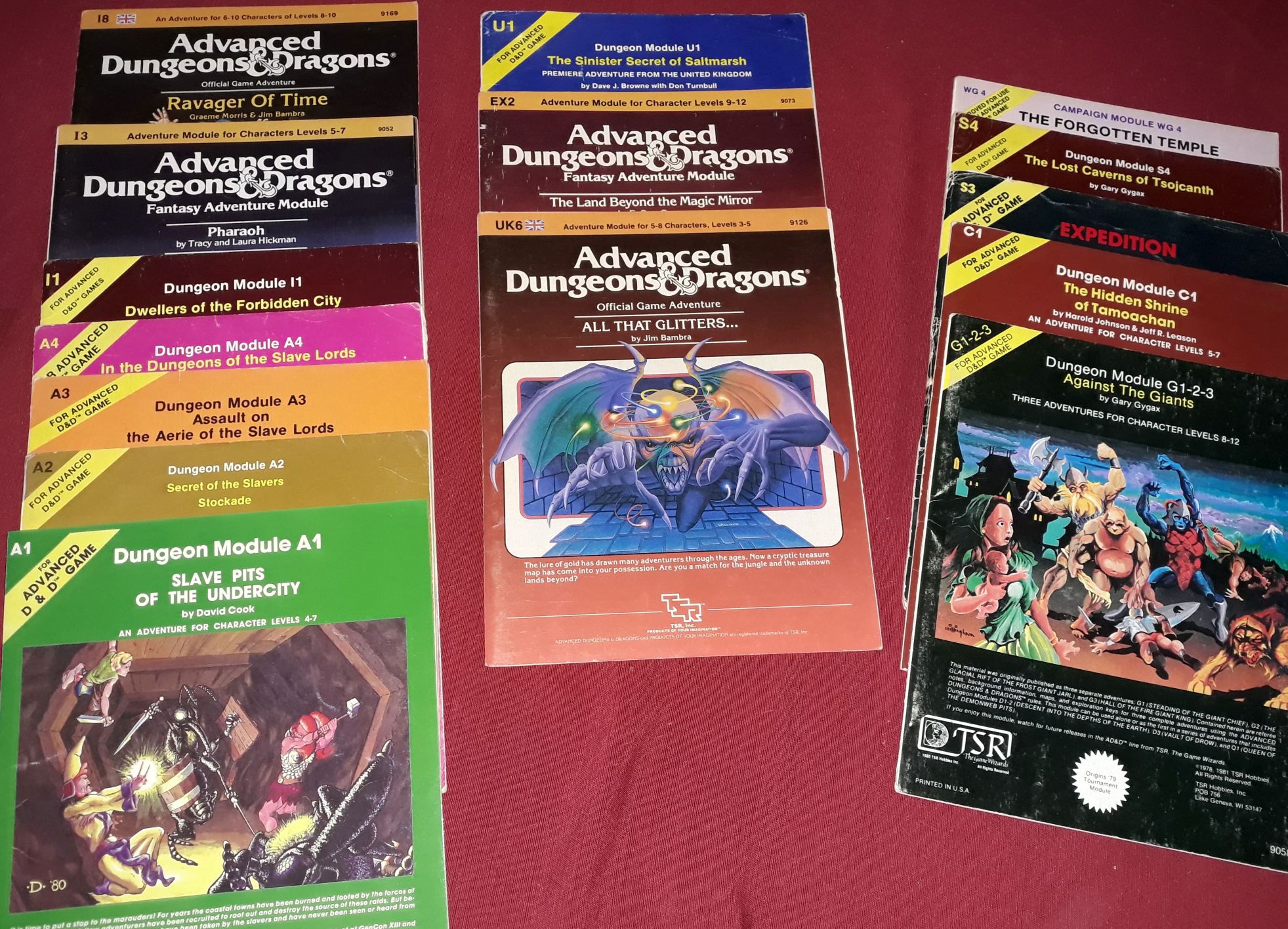
I know I have more than what’s pictured. The “filing system” in my library is more of an art than a science. For example, I know I have S1. Somewhere.

I also used to have more AD&D modules than these. For example, I know I had EX1 when I was in high school. I remember staying up all night running a group of friends through it. While moving from home to Fort Bragg, North Carolina, to Schofield Barracks, Hawaii, and then back to Houston, Texas, some things got lost, left behind, or (ye gods!) stolen. Whatever. Things break. They get lost. C’est la vie.

My current gaming group has taken up 5E D&D. My son Christopher started us out in the village of Hommlet (not depicted but definitely in the library somewhere). It worked well enough. When Christopher got a part in A Midsummer Night’s Dream, he had to slack off on the DMing, so I picked up the ball and am almost done running the group through Forest of Doom, an adventure published in one of the Dragon magazines I have stashed away.

Both Christopher and I worked on retooling the adventures for 5E, which uses different maths than AD&D. Lately, I’ve started wondering if that was necessary. Permit me to explain.

In The Sinister Secret of Saltmarsh, the DM is told that the “module is designed for 5-10 characters of experience levels 1-3.” Right there is a difference between 1E and 5E expectations. A party of 10 characters in a 5E adventure? The system isn’t built for that. The few official adventures for 5E I’ve read assume a party of 5 characters. The 5E DMG assumes “that you have a part consisting of three to five adventurers” (p. 83). Sinister Secret assumes twice as many characters.

5E has an encounter budget system designed to create so-called balanced encounters of varying difficulties suitable for the levels of the adventurers facing the challenges. I’m not a fan of encounter budget systems. I don’t balance my checkbook, which is certainly more important than D&D, so why should I have to balance encounters? That’s work, and I do enough work at work.

Turning to page 6 in Sinister Secret, I find the random encounter table. It has four entries: four goblins, a pair of giant rats with three of their young, a giant weasel, or six giant ants. Let’s crunch some numbers for the goblins:

AD&D Goblins (x4): AC 6, 4 hit points each (16 hit points total), THAC0 20. Translated into 5E terms, that’s AC 14, 4 hit points each, +0 attack bonus.

5E Goblins (x4): AC 15, 7 hit points each (28 hit points total), +4 to hit. Translated into 1E terms, that’s AC 5, 7 hit points each, THAC0 16 (equal to a 2 HD monster).

This might seem like 5E goblins are tougher, but not quite. 5E characters tend to have more hit points than 1E characters, and their attack and damage bonuses are better as well. The big difference, it seems to me, is the goblin’s attack bonus. 5E goblins are going to hit more often than 1E goblins. Likewise, 5E characters are going to hit more often than 1E characters, at least at 1st-level.

All in all, it seems like the two editions are close in expectations. I probably don’t need to bother adjusting this wandering monster encounter. But what about one of the more difficult combats?

In the caves beneath the haunted house in Sinister Secret, the adventurers likely encounter, all at once, these creatures: a 4th-level illusionist, a human smuggler (equal to a 1st-level fighter), and five gnolls. In 5E terms, that’s a deadly encounter for five 1st-level characters, and that’s fine. It’s supposed to be a tough fight.

But what about the hit points?

The illusionist in AD&D terms has 11 hit points. In 5E, he could have between 20-30, depending on Constitution. The 5E smuggler would likely have about the same hit points as a 1st-level fighter. The five gnolls in AD&D terms have 60 hit points total versus 110 hit points total in 5E. Assuming all five gnolls hit in a round, they’ll average 25 to 30 points of damage. In 5E? 25 points of damage. Interesting coincidence. The THAC0 of a 1E gnoll and a 5E gnoll are comparable, as are the the AC. In short, it seems that the major difference between 1E and 5E might be the hit points. (Compare, for another example, 12 hit points each for lizard men versus 22 hit points each for lizardfolk.)

So, what happens if I run a 1E adventure for 5E characters, but don’t do anything in terms of trying to balance encounters?

I’m not sure, but I’d like to find out.
December 8th, 2018  in RPG 2 Comments »

The Old School Holiday Adventure Bundle

Ho, ho, hozzah!

The Old School Holiday Adventure bundle is now ready for you to stuff into someone’s virtual stocking. For $11, you get these OSR-compatible products:

Goshahri: The City in a Cave
The Bishop’s Secret
Narvon’s Sinister Stair
Aquatic Depths & Denizens
Chance Encounters
Demi-Human Adventurers
El Mariachi de Combate
Fearsome Creatures of the Lumberwoods
Gruß vom Krampus!
Map Collection I
Map Collection II
Rantz’s Fair Multitude
Shallows & Sharks: Old School Fantasy Version
That’s a Goblin!?
The Bard
The Magus

That’s 16 titles full of adventures, monsters, magic items, character classes, and more.

December 8th, 2018  in RPG No Comments »

Shoes of Plenty

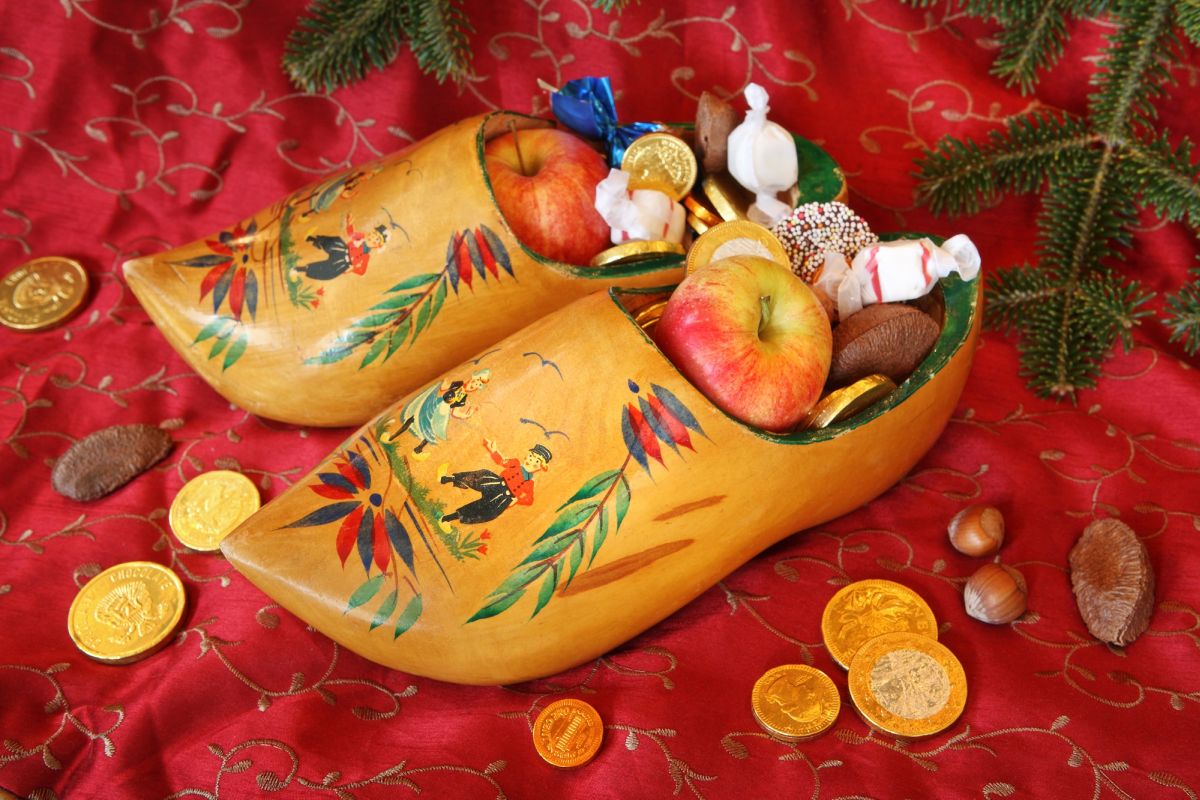
One of the many cool things about being Catholic is that once a year you get to eat food out of a shoe. That day is today, the feast day of St. Nicholas of Myra, who was born some time around the late 3rd century in Asia Minor. Nicholas was imprisoned for being a Christian under Diocletian, but gained his freedom after Constantine legalized Christianity (Nota Bene: Not made Christianity the official religion of the Roman Empire, as far too many people wrongly claim.)

Nicholas had a reputation for covert generosity, allegedly sneaking around Myra at night, chucking bags of gold through the windows of poor fathers faced with the prospect of having to sell off their daughters into slavery. Supposedly, one such bag of gold landed in a shoe, and thus the Catholic tradition of eating chocolate coins out of shoes today.

Shoes of Plenty
Wondrous item, rare

These normal-seeming shoes possess a remarkable power. When unworn and left in an unobserved place for a long rest, they magically fill with fresh fruit, nuts, and 1d6 gold pieces. The quantity of fruit and nuts is equivalent to one meal for one person.

December 6th, 2018  in RPG 1 Comment »

The Old Crone of Pohjola

And it’s back to my series of 5E D&D conversions of material from the AD&D Deities & Demigods. When last I left off, I’d tackled a bit of the Finnish Mythos as well as several magical items. Returning to the Finnish Mythos, I’m faced with a minor irritation. Most of the Finnish Mythos consists of heroes, and converting heroes to 5E D&D is a bit of a pain. So, in order to minimize the pain bits, I’m going to limit myself to three final Finnish Mythos conversions.

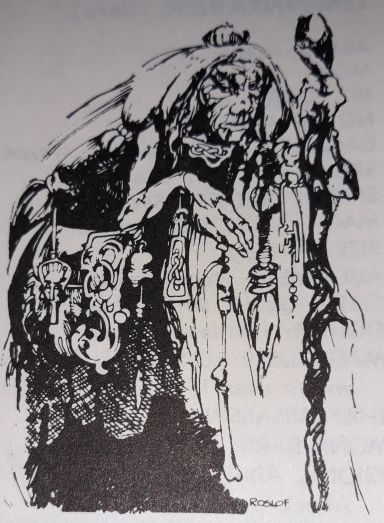
The first is Louhi, the wicked crone who rules “the evil land of Pohjola with an iron hand.” In later posts, I’ll get to the Son of Pohjola, Louhi’s savage offspring (and one of the few NPCs from Deities & Demigods that I ever used while DMing). I’ll finish up the Finnish Mythos with the air maidens, those angelic servants of Ukko, the supreme god of the Kalevala.

(Nota Bene: That link above is an affiliate link.)

Louhi rules the evil land of Pohjola with an iron hand. She opposes all of the good heroes of Kalevala, and works continuously for their downfall. (Deities & Demigods, page 60)

Louhi
Medium humanoid (human), lawful evil

Armor Class 14
Hit Points 110 (13d8+52)
Speed 25 ft.
Ability Scores STR 8 (-1), DEX 18 (+4), CON 19 (+4), INT 19 (+4), WIS 14 (+2), CHA 7 (-2)

Saving Throws INT +14, WIS +14, CHA +3
Skills Arcana +9, Intimidation +3, Perception +9, Nature +9
Damage Resistances necrotic, poison
Senses passive Perception 19
Languages Common, Giant, Infernal
Challenge 14 (11,500 XP)

Illusion Immunity. Louhi cannot be fooled any illusion created by a cantrip or 1st-level spell (or their equivalent).

Legendary Resistance (3/Day). If Louhi fails a saving throw, she can choose to succeed instead.

Magic Resistance. Louhi has advantage on saving throws against spells and other magical effects.

Mind of Iron. Louhi’s proficiency bonus for Intelligence and Wisdom saving throws is doubled.

Queen of the Dead. Undead never attack Louhi unless controlled to do so, and even then, the undead have disadvantage on attack rolls to hit Louhi. When Louhi casts animate dead or create undead, the undead she creates have 15 additional hit points and inflict an additional 5 points of damage with their attacks.

Spellcasting. Louhi is a 15th-level spellcaster. Her spellcasting ability is Intelligence (save DC 17, +9 to hit with spell attacks). She prepares spells from the cleric (up to 5th-level spells), druid (up to 5th-level spells), and wizard (up to 8th-level spells) lists. She has the following spells prepared:

Cantrips (at will): dancing lights, mage hand, minor illusion, poison spray, sacred flame
1st level (4 slots): cure wounds, mage armor, silent image, thunderwave
2nd level (3 slots): hold person, phantasmal force, spike growth
3rd level (3 slots): animate dead, protection from energy, vampiric touch
4th level (3 slots): divination, phantasmal killer, wall of fire
5th level (2 slots): contagion, mislead
6th level (1 slot): circle of death, create undead
7th level (1 slot): etherealness
8th level (1 slot): incendiary cloud

Spell Recovery (1/Day). Louhi has learned to regain some of her magical energy by meditation. When she finishes a short rest, she can choose expended spell slots to recover. The spell slots can have a combined level that is equal to or less than 15, and none of the slots can be 6th level or higher.

Actions

Quarterstaff. Melee Weapon Attack: +4 to hit, reach 5 ft., one target. Hit: 2 (1d6-1) bludgeoning damage plus 4 (1d8) poison damage, or 3 (1d8-1) bludgeoning damage plus 4 (1d8) poison damage if used with two hands.

Legendary Actions

Louhi can take 3 legendary actions, choosing from the options below. Only one legendary action can be used at a time and only at the end of another creature’s turn. Louhi regains spent legendary actions at the start of her turn.

Cantrip. Louhi casts a cantrip.

Detect. Louhi makes a Wisdom (Perception) check.

Teleport. Louhi magically teleports, along with any equipment she is wearing or carrying, up to 60 feet to an unoccupied space she can see.

Lair Actions

Within the evil land of Pohjola, Louhi reigns supreme. If Louhi is encountered in her lair, she has a challenge of rating of 15 (13,000 XP). While in her twisted forest home or forboding castle, on initiative count 20 (losing initiative ties), Louhi takes a lair action to cause one of the following effects:

Blinding Ice and Snow. A whirling cloud of ice and snow roars up around Louhi. Each creature within 10 feet of her, including around a corner, must succeed on a DC 18 Constitution saving throw or be blinded until the end of Louhi’s next turn. A creature that succeeds on the saving throw is immune to this effect until the end of the Louhi’s next turn.

Grasping Shadows. Sinuous shadows appear in a 20-foot radius centered on a point on the ground that Louhi can see within 60 feet of her. That area becomes difficult terrain, and each creature there must succeed on a DC 18 Strength saving throw or be restrained by the shadows. A creature can be freed it it or another creature takes an action to make a DC 18 Strength check and succeeds. The grasping shadows fade away when Louhi uses this lair action again or when Louhi dies.

Queenly Might. Louhi rolls 1d8 and regains a spell slot of that level or lower. If she has no spent spell slots of that level or lower, nothing happens.

Regional Effects

The region around Louhi’s forboding castle is warped by her powerful magic, which creates the following effects, all of which fade within 1d10 days if Louhi dies.

* Icy fog lightly obscures the land within 6 miles of Louhi’s castle.

* While Louhi is at rest, storms rage within 6 miles of Louhi’s castle, forming blizzard conditions.

* Icy, jagged formations create labyrinthine passages within 1 mile of Louhi’s castle. The formations act as 10-foot high, 10-foot thick walls that block line of sight. Creatures can move through the passages as if they were difficult terrain. Each 10-foot cube of ice has AC 5, 30 hit points, resistance to bludgeoning and slashing damage, vulnerability to fire damage, and immunity to psychic and lightning damage.

November 15th, 2018  in RPG No Comments »

Frog Wraiths

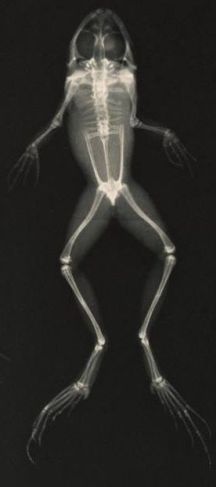
Emerging from the darkness, bones sizzling and glowing, hovering just above the rippling water, nearly as tall as a man. Frog wraiths!

Nota Bene: All links below are affiliate links.

*****

For The Black Hack:

Frog Wraith (HD 5)

Chilling Touch: STR (1 Close) 6 dmg
Croak: DEX (1 Nearby) 6 dmg

Incorporeal! Ignores all damage from even damage die rolls.
Soul Rending! Armor Dice cannot be used to negate damage dealt by the Croak.

*****

For Mutant Future:

Frog Wraith
No. Enc.: 3d6
Alignment: Chaotic
Movement: fly 120′ (40′)
Armor Class: 7
Hit Dice: 6
Attacks: 1 (cold ray)
Damage: 4d6
Save: L3
Morale: 10
Hoard Class: None
XP: 1,000

Mutations: Energy Ray; Unique (Out of Phase, Vampiric Croak)

The strange, deadly frog wraith attacks either with a ray of intense cold out to a range of 50 feet or else with its vampiric croak, a mental attack with an effective WIL of 2d6+6 that drains 2d4 hit points from each affected creature within 30 feet. These absorbed points go into a separate reserve for the frog wraith, and any damage inflicted on the frog wraith is taken from these reserve points first. Frog wraiths exist partially out of phase with reality. Non-mental attacks are 50% likely to not harm a frog wraith.

November 12th, 2018  in RPG No Comments »