B Is For Bellatrix & Brutos

Bellatrix was founded as a gengineering research outpost by the Meteor Alliance, a long-defunct corporation. The planet’s minimal biosphere was believed to be an ideal location for genetic manipulation of microorganisms, including the wide variety of alien microbial life that still manages to thrive in the planet’s waterless, inhospitable conditions.

When the dragons invaded the sector, they had little reason to focus much attention on Bellatrix. The population was small and inoffensive. As the rage of the dragons gave way to the Tiamat’s supremacy, Bellatrix suffered only brief violence. The Meteor Alliance was dismantled, and for centuries nothing lived on Bellatrix except alien microbes. During the Age of Ashes, Duke Níðhöggr of Ylli permitted the establishment of a colony on Bellatrix under the auspices of Highbeam Multistellar, a new gengineering outfit with corporate offices on Níðhöggr’s throneworld. (For an example of Bellatrixian gengineering applied to military purposes, check out the plague fungus.)

Vast resources were funneled to Bellatrix to build the four amazing flying cities that circle the plant’s equator in the stratosphere. Corporate structure on Bellatrix also defines the planet’s government, but promotions are highly competitive, based on technical and research expertise, and occur every six years. Selections for positions are made by the corporate offices on Ylli, and competition is fiercely cutthroat.

Visitors to Bellatrix need to be aware of the world’s restrictive laws. The wheels of corporate bureaucracy drive Bellatrix’s regulatory culture, albeit at a grindingly slow pace. Since there is no legislative process on Bellatrix outside business meetings and boardrooms, the maze of regulations changes frequently, often with little apparent rhyme or reason.

Bellatrixian society is divided into three castes. At the top of the social pyramid are Highbeam Multistellar executives, their families, and their staffs. Below this upper crust are the technicians, scientists, and researchers who work for the corporation, as well as members of skilled professions who work on Bellatrix with company sanction. The Brutos comprise the largest and lowest caste.

Brutos have been gengineered to perform the bulk of the unskilled and semi-skilled labor on Bellatrix. They work as janitors, drivers, loaders, et cetera. Brutos are human, but they have a decidedly Neanderthal-like appearance. They were designed for physical strength and endurance, as well as for subpar intelligence and heightened docility.

The latter traits, however, proved maladaptive, and subsequent generations of Brutos have experienced genetic shifts leading to increases in intelligence and independence. While Bruto intelligence still averages less than “pure strain” human norms, exceptional Brutos reach human median IQ.

About a decade ago, these changes in Bruto DNA culminated in the Bruto Collective. Bruto workers in the anti-gravity substructures of Bellatrix’s flying cities seized control of vital systems and threatened to wreak havoc if their demands weren’t met. Tense negotiations and scattered incidents of violence ended with Brutos being granted limited property rights and minimal stock options by the Board of Directors. The Bruto Collective gained recognition as a worker’s organization.

Bellatrix at a Glance
Population: 215,000
Atmosphere: Composed mostly of argon and neon.
Climate: Tropical to temperate
Government: Corporatism
Tech Level: 4

Bruto Characters: Any character from Bellatrix can be a Bruto. Brutos are humans, but a Bruto character must have a 13 or better in Strength and Constitution and less than an 11 in Intelligence. Normally, a character may have a number of stowed items equal to their full Strength score. Brutos are built for portage. Treat a Bruto’s Strength as 2 point higher for purposes of encumbrance.

The Bruto Collective
Attributes: Force 4, Cunning 1, Wealth 3
Hit Points: 15
Assets: Force/Zealots 3, Wealth/Union Toughs 2
FacCreds/Turn: 3
Tag: Warlike
Tag Effect: Once per turn, this faction can roll an additional d10 when making a Force attack.
Homeworld: Bellatrix
Goal: Commercial Expansion: Destroy three Wealth assets of rival factions.

The Bruto Collective is a high-muscle, aggressive labor union. Its leaders have some pull in the corporate government of Bellatrix, and its members work in numerous capacities related to maintenance, shipping, et cetera. A Bruto Collective strike can shut down corporate business, and the membership has the muscle to cause some rough damage if provoked.

April 2nd, 2013  in Product Development, RPG 1 Comment »

A Is for Artists Against Tyranny!

Tyrants and those who support them have a long history of both mistrusting and using artists. Go all the way back to Plato’s The Republic for recommendations about censoring religious myths, poetry, song, et cetera. (Aside: I am thoroughly convinced most to all of The Republic is correctly understood as an extended exercise in philosophical irony.) In more recent times, oppressive regimes have murdered poets (Federico Garcia Lorca, for example) and persecuted musicians (Johnny Clegg, for example). Tyranny’s sympathizers also have used art to waged campaigns of slander against those who oppose tyranny (for example, Rolf Hochhuth’s The Deputy, discussed here and here)

On the macro scale in Tiamat’s Throne, the campaign’s space sector groans under the claw of Tiamat and her dragon dukes. Since the sector is a big place, and even a starship-sized dragon has limited reach, the amount of tyranny varies from place to place, but every world suffers to some degree. On Adhara, the planet’s vibrant arts community has attracted special attention.

From my rough-draft document:

“The vibrant arts communities have proven problematic in the past. Artistic expressions of contempt directed against Apophis and Tiamat resulted in violent reprisals. Since those dark days, Adharan republics have instituted severe restrictions on freedom of expression. Political speech and art is heavily regulated, and the penalties for underground art are particularly harsh. This conflict between a famous cosmopolitan arts culture and repressive controls on artistic expression is a sore spot with many Adharans.

“The ‘art police’ lack the personnel and expertise to adequately enforce speech laws in a few economically depressed wards. Radical underground artists run illegal presses and traveling galleries among the underclasses of these areas. Missionary priests associated with the Domini Canes also aid and abet these criminal artists.”

In these two paragraphs, I have the hints of three different Stars Without Number factions: a renegade artistic assocation, the “art police”, and the Domini Canes. Let’s stat up the second of these.

Ministry of Arts
Attributes: Force 5, Cunning 6, Wealth 3
Hit Points: 29
Assets: Force/Elite Skirmishers 2, Cunning/Cyberninjas 3, Cunning/Informers 1,
Wealth/Lawyers 2
FacCreds/Turn: 4
Tag: Secretive
Tag Effect: All assets purchased by this faction automatically begin Stealthed.
Homeworld: Adhara
Goal: Blood the Enemy: Inflict 14 hit points of damage on an enemy faction.

The Ministry of Arts has two faces: one public, the other covert. Everyone knows about the covert face, but only the brave or foolish talk about it too much. The public face of the MoA operates art museums and holovid stations, sponsors sanctioned artists and art shows, and otherwise presents Empire-friendly artistic activities. The MoA’s covert face operates in secret, monitoring Adhara’s underground arts and entertainment. Artists who are judged too subversive are targeted for corrective action.

P.S. For an example of Adhara’s native fauna, check out the ghost moth.

April 1st, 2013  in Product Development, RPG No Comments »

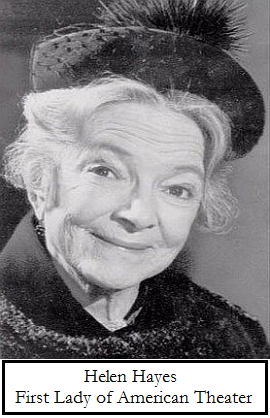
Heather Donohue Versus Helen Hayes

One of the elements of an effective horror story is a sympathetic protagonist. The person beleaguered by the Forces of Evil needs to be a sort of person that the audience wants to prevail. For example of what I’m not talking about, consider the foul-mouthed crybabies in The Blair Witch Project. Even before the terror started, I was anticipating the student filmmakers’ demises. If you write a horror story, and the audience (in this case me) ends up rooting for the Forces of Evil, I feel as if you’ve perhaps missed something important.*

In contrast (and, yes, it’s not really a horror film), consider 1970’s Airport. Most of the film’s running time is spent not on the disaster but rather focuses on the hopes, dream, conflicts, and disappointments of the ensemble cast. By the time the bomber (Van Heflin in his final film role) jumps into action, the audience has been given plenty of reasons to not want the villain to succeed. The characters threatened are sympathetic, even while they are not without their flaws.

When designing a scenario for a horror RPG session, there’s plenty of good advice out there. (See, for example, “Horror in Roleplaying” by Ernest Mueller.) Some of this advice talks about how to use the players’ investment in their characters as a spur to create dread. In other words, the PCs are sympathetic characters that the audience (meaning the players) wants to succeed. As the scenario’s designer and GM, I also need to keep in mind the need for sympathetic NPCs. The horror story I’m designing and asking my players to participate in needs to have an ensemble cast featuring more than just the Forces of Evil and miscellaneous stock characters.

Many Call of Cthulhu scenarios handle this task admirably by providing the GM with an assortment of NPCs, some good, some useful, and others evil. Time is then given in the scenario for the players’ characters to encounter and interact with these NPCs, thus modeling the movie format of Airport: introduce the main actors so that the audience’s opinions and expectations for their roles can be established.

Should the Forces of Evil kill The Blair Witch Project‘s Heather Donohue? Yes, please. Should the Forces of Evil kill Airport‘s Helen Hayes? Never! What’s the difference between the two ladies? Helen Hayes portrays a sympathetic character that the audience wants to live.

*Of course, this might just say a whole lot more about me and my tolerance for foul-mouthed crybabies.

March 19th, 2013  in RPG No Comments »

Skill Checks in SWN

Stars Without Number has a nice little skill system. A character gets skills based on background package (related to the PC’s background) and training background (related to the PC’s class). Additional skills, or higher levels with previous skills, are acquired during level advancement via skill points. The number of points required to purchase the next level in a skill increases with skill level, and the maximum skill level is capped by PC level.

Skill checks are made by rolling 2d6, adding the relevant skill’s level and appropriate attribute modifier. Skills aren’t explicitly tied to a specific attribute. An untrained skill check suffers a -1 penalty. The easiest skill checks are usually difficulty 6, and challenging skill checks face difficulties of 10 or higher.

Now, all of that said, there are two things about SWN’s skill system I don’t like:

1. The use of skill points to purchase skills.

2. PCs having a specific list of skills with associated ranks.

Explaining the first point is easy: It’s more bookkeeping, and I dislike bookkeeping. That’s pretty much it. I don’t think skill points are bad or wrong or inferior. I just don’t like there being yet another group of points that have to be accounted for.

The second point requires more explanation; so, here goes.

In my experience (emphasis: my experience), when a player sees a list of skills on a character sheet, two things pop up:

1. That list of skills are the only skills the character can use.

2. Therefore, the player limits his PC’s actions to the skill list on the character sheet.

When these two things pop up with too many players, a sort of critical mass is reached that can result in party paralysis. “Gosh! None of us have that skill. How are we supposed to succeed? This adventure sucks!” Not only does this break immersion in the game, it’s also just plain irritating. I like for the PCs in my games to be the heroes, and heroes don’t whine about how the adventure sucks. Heroes grit their teeth, suck it up, and drive on.

Here’s what I want to do with SWN instead of the core-rules way of doing things. First, I want to use the “You Lack Skills” rules presented in the Skill Checks section of the core rules. This means each PC has a skill check bonus equal to +1, +1 more for every three levels of experience, whenever attempting any activity that the player can reasonably explain as part of the PC’s background and training packages.

I’m thinking this approach gets rid of both of the things I dislike about SWN’s skill system.

I’ve also been struck by an idea Erik Tenkar mentioned in this blogpost. Erik wrote, “I’ve got some tweaking to work on with this, such as the first time a Natural 20 is rolled in a certain circumstance (picking a lock, finding tracks or swimming a turbulent river and the like) I’m going to give the PC a + 1 to that particular circumstance as a permanent bonus.” This idea has some sweetness. Modified for 2d6, the bonus could come up on an 11-12 (assuming success, for about an 8% chance of getting the bonus) or only on a 12 (for about a 3% chance of getting the bonus).

That make sense?

March 18th, 2013  in RPG No Comments »

Meet the Syrlōps

Matt Jackson over at Lapsus Calumni is running a monster-making contest focusing on the fellow in the picture to the right. The best entry receives a March to June subscription to Monsters By Email. Since I love contests and monsters, how could I pass this one up?

Syrlōps
Hit Dice: 6+6
Armor Class: 3 [16]
Attacks: 2 fists (1d6), 1 tail (1d8+2)
Saving Throw: 11
Special: Half-damage from blunt and piercing weapons, magical chords
Move: 12
Alignment: Neutrality
Challenge Level/XP: 8/800

A syrlōps (plural syrlōpes) is a bizarre mixture of humanoid and plant. It stands taller and broader than even the largest human, although it tends to lurch about in a near crouch, moving sometimes on all fours. Its body is covered with a conglomeration of bark, knotted roots, leaves, hair-like moss, and corded muscles. This tough composite of tissues is particularly resistant to weapons that pierce or crush (such as arrows and maces). In combat, a syrlōps fights with punishing blows from its powerful fists and tail.

The most outstanding feature of a syrlōps’s body are the twin rows of tube-like structures that grow from its hunched shoulders down its back. After a prodigious inhalation, a syrlōps can force air through these structures to create musical tones over a range of three octaves and in an impressive array of combinations, producing harmonies to rival those a woodwind virtuoso. What’s more, once per round at will, a syrlōps can pipe magical chords to produce any of the following effects: charm monster, fear, sleep, or speak with plants.

Syrlōpes dwell only in the most primeval of forests and jungles. They are private, territorial creatures who resent intruders, except for non-evil fey creatures, whom the syrlōpes count as allies. Syrlōpes live in well-camouflaged villages in areas that provide exposure to sunlight and access to fresh water. Nixies, pixies, and sprites often dwell in or near these villages, helping protect the dwellings from marauders and trespassers. Syrlōpes have male and female genders, and they marry and raise offspring, which are hatched from large, nut-like pods. Both male and female syrlōpes nurse the young with a sap exuded by their root-like fingers. Weaned syrlōpes feed on sunlight, water, and a variety of roots, tubers, and flowers. Syrlōpes live for centuries, and they speak the language of the fey. They may also communicate with each other over great distances by means of songs loudly played.

March 11th, 2013  in RPG No Comments »