Day 3: Bells
Far to the east in the rugged mountains of an uncivilized land, jungle tribes of humans live in simple villages, growing rice, peas, sugarcane, and spices, some of which find their way into civilized markets, brought by ships or caravans. Centuries ago, this land of rice and spices was ruled by belligerent princes, the sons of a great king who in his twilight years divided his land and turned his mind toward heavenly things. This king reckoned that he could secure a place in the Upper Planes by honoring the gods of those planes, something he had failed to do throughout his life.
And so the king commissioned foreign bell founders to cast an enormous bell that would sound on the anniversary of his death. He sent out soldiers to his provinces and rounded up hundreds of able-bodied men who, under threat of torture and mutilation, set to the task of building a great mausoleum and temple. In its former capacity, it would hold the king’s body, his most valued possessions, and two score specially chosen servants and wives who would be interred alive with their monarch. In its latter capacity as temple, it would honor the deeds of the gods of the Upper Planes, serving as a place of pilgrimage for the faithful. Thus, the gods would be pleased with the king and grant him a place among their ranks.
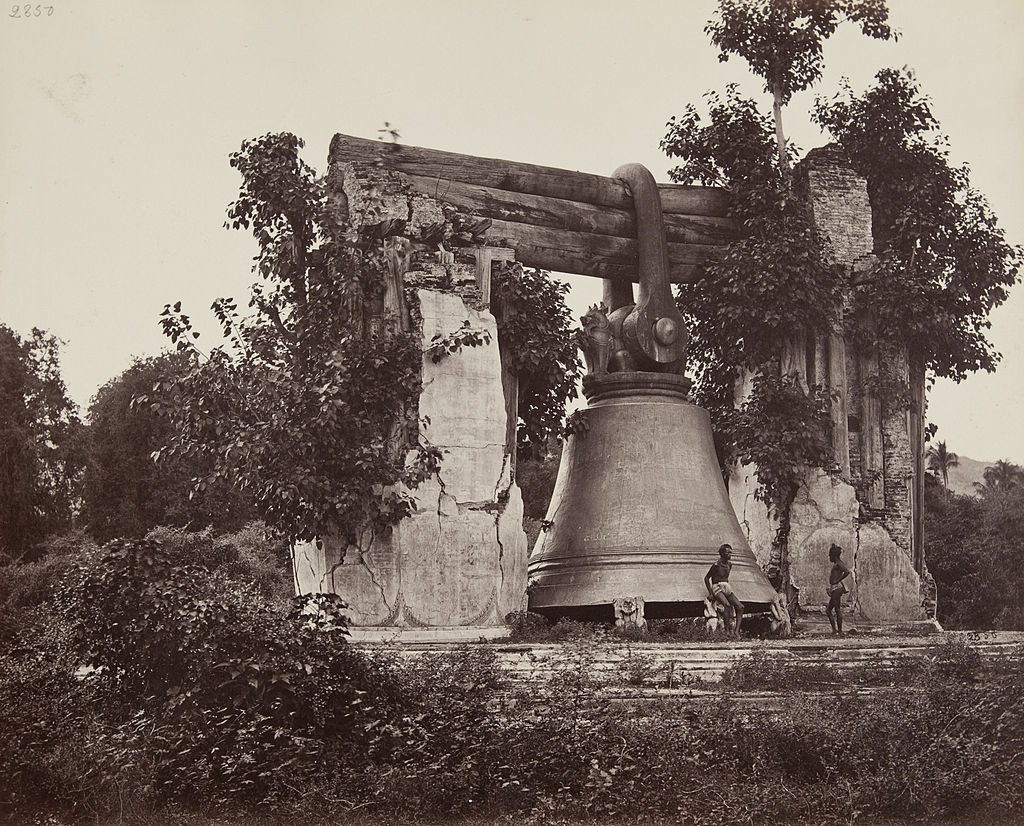
The bell was completed first and installed some three hundred yards to the east of the mausoleum-temple. By this time, slaves had labored for a nearly a decade on the first floor and crypts of the king’s grand folly. The suffering of the slaves was a blight upon the land, and the costs of the bell and the construction threatened to bankrupt the kingdom. The people murmured against the king, and the king’s sons met to discuss what to do.
First, the princes’ spies confirmed the rumors of the king’s madness. The gods, far from pleased with the king’s arrogance, touched his mind, stirring up obsessive thoughts about ever more elaborate ways to please the heavens. Dozens of bizarre rituals consumed the king’s waking hours. He had to eat three eggs every morning as the sun rose, eating each one facing a different direction, but never facing the west. He wore mismatched boots. Every other door in his palace had to be bolted, and every other window was left unshuttered.
When an earthquake struck the region of the mausoleum-temple, a falling tree hit the bell, causing it to sound. The facade of the mausoleum-temple cracked. The princes seized upon this event, convincing their deranged father that the gods were displeased with his wasteful ways. Construction was halted, and those men who survived the years of hard labor returned to their homes.
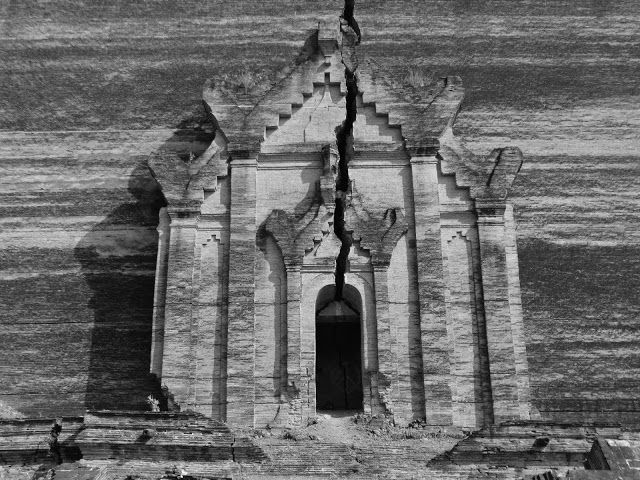
A few days after construction was halted, guards burst into the king’s bedchambers and murdered him. The princes interred his body according to the king’s instructions, selecting several of their enemies to serve their father in the next life. In short order, the princes took to squabbling and then warring among themselves. Civil war destroyed the kingdom. The jungle reclaimed much of the land. The king’s bell and unfinished mausoleum-temple remain. The jungle tribes know the place is cursed, and they avoid it entirely. Their elders believe that the king’s bell will sound again, heralding the dead king’s return.
Whatever sleeps in the mausoleum-temple possesses great power and greater evil. Its presence has twisted the environment within and around the mausoleum-temple.
Lair Actions
When the dead king fights inside his lair, he can invoke the ambient magic to take lair actions. On initiative count 20 (losing initiative ties), the dead king takes a lair action to cause one of the following effects:
* The dead king calls forth the angry spirits of those who died building his lair. The spirits attack one creature that the dead king can see within 60 feet of him. The target must succeed on a DC 16 Strength saving throw, taking 36 (8d6) necrotic damage and being dragged 120 (7d6 x 5) feet away from the dead king on a failed save. On a success, the target takes half as much damage and is not dragged away by the wailing cloud of spirits.
* The dead king’s undead servants within the lair act as the dead king’s eyes, ears, and voice. As a lair action, the dead king can bolster one of his undead servants by having it act as his proxy until initiative count 20 of the next round. The bolstered undead makes attacks and saving throws with advantage, and it gains 14 (4d6) temporary hit points. The temporary hit points fade after the dead king stops using the undead creature as his proxy.
* The dead king warps the structure of his lair at will. He chooses one creature he can see within 60 feet. The target must succeed on a DC 16 Dexterity saving throw to avoid being entombed, surrounded by stone walls (as per wall of stone).
Regional Effects
The region containing the mausoleum-temple is profaned by the dead king’s evil, which creates one or more of the following effects:
* Giant spiders and monstrous insects infest the region. These creatures act as the dead king’s eyes and ears if they are within a 1 mile radius of the dead king’s lair.
* Within the 1 mile radius of the dead king’s lair in which giant spiders and monstrous insects act as the dead king’s eyes and ears, the jungle assumes a hostile quality as well, making it easier for the dead king’s eyes and ears to move unseen and unheard. Giant spiders and monstrous insects within 1 mile of the dead king’s lair make Dexterity (Stealth) checks with advantage.
* The jungle shifts and twists within a 6 mile radius of the dead king’s tomb. Trespassers in the area always treat the jungle as at least a lightly obscured area, which imposes disadvantage on Wisdom (Perception) checks that rely on sight. Wisdom (Survival) checks to avoid getting lost or to follow the tracks of another creature are made with disadvantage.
If the dead king is destroyed, the supernatural link between him and the giant spiders and monstrous insects breaks immediately. These creatures lose the ability to make Dexterity (Stealth) checks with advantage as well. Within 3d10 days, the jungle around the dead king’s lair ceases to shift and twist.
 The House
