Posts Tagged ‘ monsters ’

L Is for Lake Monsters

Well, here’s another week gone by, and I’m working on my post for the day kind of late. I didn’t home ’til a bit after midnight last night, and I was up early this morning to go help a local non-profit write curriculum material for math. After that, it was naptime, and I still hadn’t figured out what I was going to write about. On top of that, the XBox Live wasn’t working. Horrors!

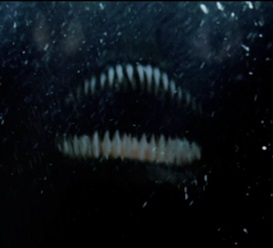
So, I pulled up Netflix on my laptop, and I started to watch Hypothermia, a modest little film starring Michael Rooker (Henry: Portrait of a Serial Killer, The Walking Dead) about two ice-fishing families and a gill-man (see also this Hypothermia trailer and this fair-minded review of the film). After being interrupted by dinner, I finished watching the movie, and I had my topic for today.

Arctic Gill-man
Hit Dice: 3
Armor Class: 4 [15]
Attacks: 2 claws (1d4), or fin slash (1d6 + infection)
Saving Throw: 14
Special: Feel vibrations, infection, surprise opponents on a 1-4
Move: 12/15 swimming
Alignment: Neutrality
Challenge Level/XP: 5/240

The arctic gill-man is a monstrous hybrid of fish, reptile, and humanoid that dwells in some lakes of arctic regions. It breathes both water and air, and it can survive on land for a several hours without discomfort. This monster is territorial and intelligent, and it will seek to defend its territory against trespassers, especially those that fish the lake or hunt along its banks. When submerged, it can feel the vibrations caused by creatures in the water or moving on the lake ice. The arctic gill-man is quite stealthy, attacking by surprise against even alert opponents with a roll of 1–4 on a d6. In combat, it attacks with either its claws or else by slashing with one of the spiny fins growing along its forearms.

The gill-man’s fin slash carries a potent toxin. A living creature struck by a fin slash must make a saving throw. Failure means the injury caused by the fin slash cannot be healed by natural means. The failed save also means a fever sets in after 1d4+6 minutes. A feverish creature suffers a -1 penalty to both attack rolls and Armor Class. Magical healing is required to overcome the injury and infection. Furthermore, as long as a creature is affected by gill-man infection, the monster and its victim have a psychic link. The gill-man can infallibly track the infected victim and can communicate with the victim via telepathy as long as the gill-man can see the victim.

April 13th, 2013  in RPG No Comments »

Meet the Syrlōps

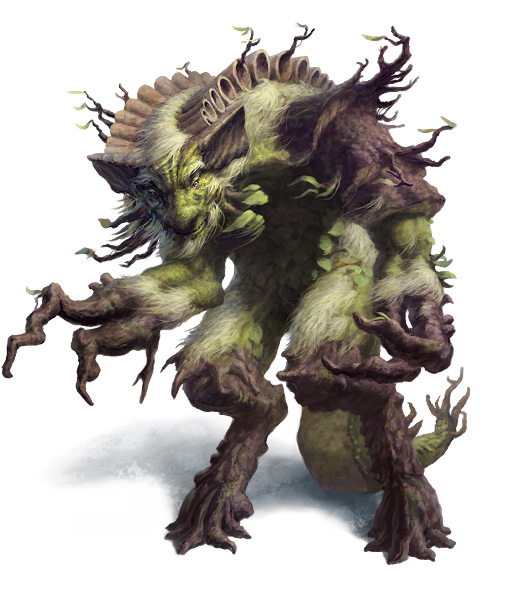
Matt Jackson over at Lapsus Calumni is running a monster-making contest focusing on the fellow in the picture to the right. The best entry receives a March to June subscription to Monsters By Email. Since I love contests and monsters, how could I pass this one up?

Syrlōps
Hit Dice: 6+6
Armor Class: 3 [16]
Attacks: 2 fists (1d6), 1 tail (1d8+2)
Saving Throw: 11
Special: Half-damage from blunt and piercing weapons, magical chords
Move: 12
Alignment: Neutrality
Challenge Level/XP: 8/800

A syrlōps (plural syrlōpes) is a bizarre mixture of humanoid and plant. It stands taller and broader than even the largest human, although it tends to lurch about in a near crouch, moving sometimes on all fours. Its body is covered with a conglomeration of bark, knotted roots, leaves, hair-like moss, and corded muscles. This tough composite of tissues is particularly resistant to weapons that pierce or crush (such as arrows and maces). In combat, a syrlōps fights with punishing blows from its powerful fists and tail.

The most outstanding feature of a syrlōps’s body are the twin rows of tube-like structures that grow from its hunched shoulders down its back. After a prodigious inhalation, a syrlōps can force air through these structures to create musical tones over a range of three octaves and in an impressive array of combinations, producing harmonies to rival those a woodwind virtuoso. What’s more, once per round at will, a syrlōps can pipe magical chords to produce any of the following effects: charm monster, fear, sleep, or speak with plants.

Syrlōpes dwell only in the most primeval of forests and jungles. They are private, territorial creatures who resent intruders, except for non-evil fey creatures, whom the syrlōpes count as allies. Syrlōpes live in well-camouflaged villages in areas that provide exposure to sunlight and access to fresh water. Nixies, pixies, and sprites often dwell in or near these villages, helping protect the dwellings from marauders and trespassers. Syrlōpes have male and female genders, and they marry and raise offspring, which are hatched from large, nut-like pods. Both male and female syrlōpes nurse the young with a sap exuded by their root-like fingers. Weaned syrlōpes feed on sunlight, water, and a variety of roots, tubers, and flowers. Syrlōpes live for centuries, and they speak the language of the fey. They may also communicate with each other over great distances by means of songs loudly played.

March 11th, 2013  in RPG No Comments »

New Dawn Combine’s Last & Present Days

I had intended this for The Grand Original Map Contest, but I didn’t get it done in time. Ah well. Just because I missed a deadline doesn’t mean all of these electrons have to go to waste.

What Happened to the New Dawn Combine?

Two generations ago, the New Dawn Combine on Cygnus III thrived as a center for innovation in sector heavy weapons technologies. Lynley, the company town built around NDC labs and offices, provided workers, executives, researchers, and their families with every modern convenience. Life was good.

But nothing lasts forever.

A massive solar storm overwhelmed Cygnus’s magnetic field, disrupting electronics throughout Lynley. This was the time the Freedom Fellowship struck a blow for the proletariat. Mobs well armed but ill organized rampaged through the streets while the Fellowship’s elite assaulted key arsenals. The revolutionary violence climaxed when someone — to this day, historians debate whom to blame — launched a multiple independently targetable reentry vehicle armed with payload of chemical weaponry. Thousands died within minutes, and even more sickened and expired over the next few days. Much of Lynley burned as fires raged out of control as first responders were overwhelmed by the number of emergencies.

Planetary government moved in much too late. By the time military personnel and disaster management teams arrived, Lynley was a city fit only for the dead. Sporadic violence near the city limits lasted for a few more days, and then the government declared Lynley and the surrounding area in a 50-mile radius to be a quarantine zone (or QZ for short). No one and nothing is allowed in or out of the zone.

But life finds a way.

A handful of Freedom Fellowship radicals survived and declared the revolution a success. They consolidated control over limited food and potable water resources, and then put out the call to other survivors to enjoy the Fellowship’s largesse. Little by little, a semblance of normalcy returned to Lynley. A handful of buildings were reclaimed and turned into the communal areas with the Fellowship’s leaders determining individuals’ needs and commensurate allowances of living space, food, and water.

Little could be done, however, about the toxic effects of the chemical weaponry that had decimated Lynley. The ground was poisoned, and the water cycle became a means which toxins entered plants and animals. Fellowship workers documented the first evidence of mutations in water plants, fish, and amphibians. The high incidence of miscarriages and birth defects in the human population added a new level of dread to life in Lynley.

Today, the QZ is a wild area of twisted vegetation, mutated animals, and ruined buildings. Most of the vegetation is at least slightly toxic, and most of the mutated animals are merely grotesque. Some, however, are dangerous, especially the predatory chemical worms. The QZ’s easiest access points are protected by sensors, automated guns, and platoons of soldiers. Armed drones patrol more difficult areas. Entering the QZ without proper authorization is difficult. Getting back out after entering illegally is even harder, and failing exist undetected is likely to end in a violent death.

These risks don’t stop adventurous black marketeers from violating the QZ in hopes of finding hidden caches of weapons and other military-grade tech. The New Dawn Combine had numerous facilities prior to the revolution, and this included arsenals protected by underground bunkers. Illegal military tech isn’t easy to come by, and the profits can be substantial.

Of course, once in the QZ, there are more problems facing looters than the return trip. Trespassers must also contend with the Fellows, as the residents of the QZ now call themselves.

Society of Fellows

The new social order forged by the Freedom Fellowship has produced a conformist, deranged community. The Fellows have ritualized protocols put into place to ensure survival in a toxic environment. Chief among these protocols are the use of protective masks and the inviolability of New Dawn Combine bunkers.

Protective Masks

Use of protective masks is not necessary in most areas of the QZ. Certain underground areas may still contain toxic levels of airborne chemicals, but, overall, air quality in the QZ is adequate, if not better than in many urban areas. Nevertheless, no Fellow will permit himself to be seen in public without his protective mask. The taboo against this is analogous to a combination of prohibitions against public lewdness and spitting in people’s faces. Many Fellows refuse to go maskless in private much of the time. Forcibly unmasking a Fellow is akin to assault, and Fellows react negatively to those who go maskless in public.

Bunkers

Fellows believe that sealed bunkers must remain sealed. If the contents of these bunkers were vital, the founders of Fellow society would have unsealed them. Since they did not, it stands to reason that the contents must be such that it is in society’s best interest for them to remain undisturbed. The bunkers have acquired an almost mystical quality in Fellow society. They are taboo territory, and would-be trespassers must be dealt with in the most pointed manner possible.
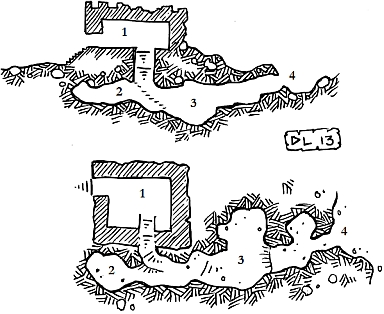
The Bunker Tower

A militarized clan of Fellows live on and around this pre-revolution military bunker in a collection of sturdy buildings organized in an efficient grid pattern. The Fellows build most of these structures from the ruins of other buildings, carting brick, concrete, wood, et cetera from other locations. The clan maintains a high degree of alertness not only due to the bunker’s sacred proximity, but also because of the large number of predatory chemical worms in the area.

1. Superstructure: While the exterior of the superstructure shows signs of damage from the elements and battle, it remains solid and sealed tight. Inside the single-storey building are offices for administrative and security personnel, all long abandoned in haste. A cargo elevator leads down to the caves beneath the superstructure.

2. Munitions: This section of the caves was converted for munitions storage. Duraflex walls and ceilings form storage units in four rows. This particular facility stores mag pistols, mag rifles, ammunition, repair kits, and other firearms accessories. It also has a cache of grenades of various types.

3. Flooded Cave: The chemical pond’s high acid content eroded a narrow but passable tunnel through surfrace strata into the caves, flooding the lowest lying areas in the process. Chemical reactions have turned the air through the cave system into a toxic haze. The water itself is highly corrosive, and predatory chemical worms thrive in this environment.

4. Chemical Pond: A bomb crater to the rear of the superstructure has long since filled with water, and deadly toxins and acids in the soil have turned the resulting pond into a highly corrosive pool ideal for predatory chemical worms. During infrequent dry spells, much of the pond evaporates, leaving a thick, poisonous sludge.

Chemical Worm (for Stars Without Number):

Armor Class: 7
Hit Dice: 1
Attack Bonus: +2
Damage: 1d4 bite
No. Appearing: 10-40
Saving Throw: 15+
Movement: 15 ft., swim 15 ft.
Morale: 8

Chemical worms grow to about the length of a man, reaching a thickness approximate to a man’s thigh. They are sandy brown in color with bloodred heads and a quadripartite jaw sporting vicious fangs. They are invulnerable to almost all poisons and acids, and they can survive in anerobic environments for long periods of time. In addition to its bite, a chemical worm can spray a scalding fluid at its prey. The spray is produced by a reaction between two chemical compounds, hydroquinone and hydrogen peroxide, stored in separate reservoirs in the worm’s throat, and then mixed when needed in a third chamber with water and catalytic enzymes. Heat from the reaction brings the mixture to near the boiling point of water and produces gas that drives the ejection. The chemical worm’s spray inflicts 1d8 points of damage in a 15-foot wide fan.

February 17th, 2013  in RPG No Comments »

The Mountain Fastness of the Vermillion Coenobites

Over at Tenkar’s Tavern, some excellent people, including map guru Dyson Logos, are running a too-cool contest. Check out the details here. Of course, I have to throw my hat into the ring, so here’s my entry for the Best Creature. This entry uses Small Map C – Troll Chasm.

The Mountain Fastness of the Vermillion Coenobites

Last century, the Vermillion Coenobites labored to create a mountain retreat where they could sing their escatic psalms to bring about the end of one age and birth of the next. For a time, the community thrived, but eventually it collapsed from within, torn apart by internal jealousies and conflicts over obscure doctrinal points. Shortly after the last abbot died, poisoned by the hands of a rival monk according to persistent rumor, the order disintegrated. Many questions about the last days of the Vermillion Coenobites remain unanswered. Chief among these questions is this one: What happened to the order’s wealth? During the cult’s heyday, several wealthy donors gave generously to the monks to secure positions of importance in the next age that the order would supposedly bring about.

Unfortunately for treasure seekers, the order’s crumbling mountain fastness is abandoned no more. A band of earthwrights now live in the ancient monastery, and these creatures do not tolerate trespassers. To warn and frighten away the curious, the earthwrights have left would-be interlopers trapped in tombs of twisted stone in which the imprisoned have starved to death.

Earthwright (for Swords & Wizardry)

Hit Dice: 3+3
Armor Class: 2 [18]
Attacks: By weapon (1d8)
Saving Throw: 14
Special: rock jump, shape earth and stone
Move: 6
Alignment: Chaos (sometimes Neutrality)
Challenge Level/XP: 5/240

Earthwrights appear much like dwarves, but stand noticeably taller and wider. They shun armor, relying on their stony flesh for protection. If forced into melee, earthwrights fight with weapons, preferring cold steel that can hack muscle and bone. More formidable than axes and broad swords, however, is these creatures’ power over earth and stone. Once per day each, an earthwright can “cast” animate object (stone objects only), passwall, and transmute rock to mud. Earthwrights move slowly, but they can rock jump once per round. This ability enables an earthwright to teleport between any two points touching earth or rock that are within 60 feet. The destination must be within the earthwright’s line of sight. Once per round instead of making a normal attack or “casting” one of its spells, an earthwright can shape earth and stone out to a range of 60 feet. The target must make a saving throw to avoid being partially entombed as the earth and stone beneath him snake upward to grab and hold. A trapped target cannot move or attack unless he first succeeds on an open doors check. Earthwrights often layer earth and stone on a victim. Each successive saving throw an already trapped creature fails imposes a cumulative -1 penalty to his open doors checks to break free.

January 19th, 2013  in RPG 1 Comment »

The Mngurumo

One of the advantages of being a one-man show of a game company is that I get to set all of my deadlines without having to worry about committees or what not. When I started writing Tiamat’s Throne, I had set a deadline of the end of February 2013 to have the playtest documents ready. I’m not too sure that’s going to happen, but I’m plodding along regardless. While the possibility of missing my deadline is a bit annoying, at least I haven’t taken anyone’s money in exchange for nothing. I guess that’s something.

Regarding Tiamat’s Throne, I’m most behind on my planet write-ups (see an example of a rough-drafted planet here). I’m trying to have a variety of planets to make it easier for GMs to mix and match various science fiction and fantasy tropes. So, for example, Castor is a undead apocalypse planet. Deneb is an arctic world. I know I want to have a dinosaur planet because dinosaurs are cool. This also means I get to make up new dinosaurs, such as:

Mngurumo

Stars Without Number Stats

Armor Class: 4
Hit Dice: 8
Attack Bonus: +6
Damage: 3d4 tail
No. Appearing: 4-16
Saving Throw: 11+
Movement: 20 ft.
Morale: 7

Swords & Wizardry Stats

Hit Dice: 8
Armor Class: 4 [15]
Attacks: Tail (3d4)
Saving Throw: 8
Special: Blind, breath weapon, immune to sonic effects, sonar
Move: 9
Alignment: Neutrality
Challenge Level/XP: 10/1,400

The mngurumo (ming-uru-mo) is a sauropod that travels savannahs in family herds. Adult bulls average 10 feet in length, excluding the tail, which adds about another 10 feet, and weigh around one ton. Cows are somewhat smaller. Mngurumos possess some unusual abilities. They are sightless, completely lacking any visual organs. What appear to be ocular cavities in the creature’s skull contain highly sensitive sonar organs. As a result, mngurumos function nearly as well as sighted creatures in most respects. When threatened, mngurumos prefer to flee, but if hard-pressed, they will fight. A mngurumo’s tail lash strikes with devastating force. Adult mngurumos also possesses a powerful breath weapon that inflicts 8d4 points of sonic damage in a cone with a length of 70 feet and a base of 30 feet. A mngurumo can use its breath weapon once per hour.

January 19th, 2013  in Product Development, RPG No Comments »