Posts Tagged ‘ monsters ’

Three More Monsters

More monsters inspired by Domenico Neziti.

Mamac
Armor Class: 5 [14]
Hit Dice: 2
Attacks: Bite (1d6)
Special: See below
Move: 6/12 (when swimming)
Save: 17
HDE/XP: 3/60

Mamacs are humanoid creatures that dwell in murky coastal waters. They appear more fish than man, with webbed fingers and toes, a prominent doral fin, an eel-like tail, and a large head split by a wide mouth. Long barbels grown from the upper and lower jaws, and mamacs have large, lidless eyes. A fleshy esca grows from a mamac’s head. This organ glows with a soft, comforting light. A mamac’s barbels pick up vibrations in the air or water, making mamacs difficult to surprise (half normal chance) and enabling the monster to fight in melee even when it cannot see. A creature not already engaged in combat who sees the light of a mamac’s esca must make a saving throw are be lulled into a passive trance that lasts as long as the light is visible or until the victim suffers damage.

Kriti
Armor Class: 7 [12]
Hit Dice: 6
Attacks: Beak (1d6)
Special: See below
Move: 6/12 (when flying)
Save: 13
HDE/XP: 7/600

Kritis are magical avian humanoids. They are darkly feathered with heads like those of crows or ravens. Wings grow from their shoulders, as do human-like arms. Their legs resemble those of a great bird. A kriti can don a few items of clothing in order to create about itself the illusion that it is whatever humanoid creature the clothing is common to. They use these disguises to move about villages in order steal shiny objects and abduct particularly beautiful children. Kritis can Speak with Animals, and once per day each they can use Phantasmal Force and Confusion.

Fenjer
Armor Class: 7 [12]
Hit Dice: 3+3
Attacks: Touch (see below)
Special: See below
Move: 12
Save: 16
HDE/XP: 4/120

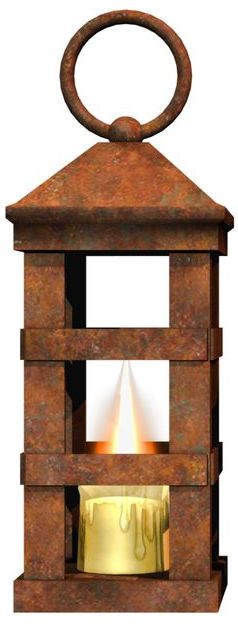
Fenjers are a type of ghost it seems, perhaps the spirits of those who died while lost. They appear much as they did in life, but are obviously not corporeal. Fenjers pass through most solid objects as if those objects weren’t there. They can only be harmed by magical weapons and by spells, except for those that cause sleep, charm, or inflict damage via cold. A fenjer’s touch is painfully cold. With each successful hit, its touch drains one point of Dexterity. If a victim is brought to 0 Dexterity, he freezes solid and dies. Dexterity points return after an hour, assuming death has not occurred. All fenjers carry a lantern. These lanterns cause night-time darkness in a 20-foot radius.

April 7th, 2017  in RPG No Comments »

Ledpauks & Rojîyans

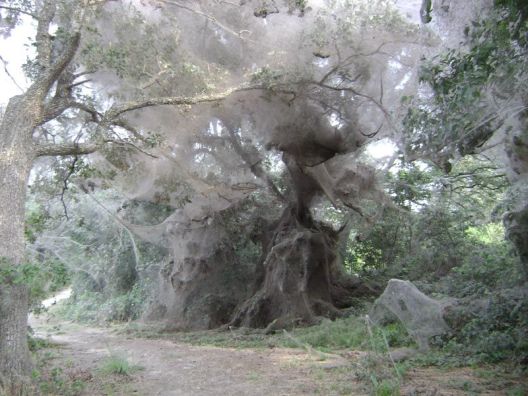
Ledpauks are monstrous spiders that are difficult to immediately distinguish from the more common web-building giant spider. In combat, however, the differences between giant spiders and ledpauks become evident, revealing why the later are the more dangerous monster. Ledpauks are immune to fire, even magical fire such as a fireball. The bite of a ledpauk is poisonous. A victim must save versus poison or be killed. Ledpauks spin their sticky webs horizontally or vertically so as to entrap any creature which touches them. The web is as tough and clinging as a web spell. Any creature with 18 or greater strength con break free in 1 melee round, a 17 strength requires 2 melee rounds, etc. Webs spun by ledpauks are are invulnerable to fire. Worse still, these webs grow instantaneously upon contact with fire. If a torch, flaming oil, or a fireball contacts the webs, they row 2,4, or 8 times their size as they “feed” on the heat.

Ledpauk
Frequency: Rare
No. Appearing: 1-4
Armor Class: 4
Move: 3″*12″
Hit Dice: 4+4
% in Lair: 70%
Treasure Type: C
No. of Attacks: 1
Damage/Attack: 3-9
Special Attacks: See below
Special Defenses: Immune to fire
Magic Resistance: Standard
Intelligence: Average
Alignment: Any evil
Size: L
Psionic Ability: Nil
Attack/Defense Modes: Nil
Level/X.P. Value: V/320 + 5/hp

The link at the top of the next stat block takes you to another excellent illustration by Domenico Neziti.

Rojîyan
Armor Class: 3 [16]
Hit Dice: 4
Attacks: Claw (1d6)
Special: See below
Move: 15
Save: 15
HDE/XP: 6/400

Rojîyans are embodied spirits sent to punish sinners. Each rojîyan is attuned to a particular sort of sin, such as one of the seven deadly. A rojîyans can always detect such a sinner out to a range of 120 feet. These monsters are immune to all non-magical weapons. Against sinners to which they are attuned to punish, rojîyans drain 1 level per hit, and they take only one-half damage from the sinner’s attacks. Rojîyans are immune to sleep, charm, and hold effects.

April 3rd, 2017  in RPG No Comments »

Boldogs & Domenico Neziti

If you’ve never checked out the art of Domenico Neziti, you’re wrong. Stop being wrong. Seriously. He’s worth your time. I’ve mentioned this before in another post that includes more links. I see work like this, and it just screams to be used in a game.

Boldog
Armor Class: 4 [15]
Hit Dice: 5
Attacks: Weapon (1d6+1)
Special: See below
Move: 12
Save: 14
HDE/XP: 6/400

Boldogs are powerful demons who are often deified by orcs. A boldog somewhat resembles an orc, but they are larger, stronger, and obviously more intelligent as evidenced by the cunning malevolence that burns in their eyes. The spells of casters below 3rd level do not affect boldogs, and these demons are 35% immune to spells from more powerful casters. In battle, boldogs fight with swords and wield shields. A boldog’s gaze causes disease, putrefies food, and poisons water.

March 29th, 2017  in RPG No Comments »

The Flu Bug

I write this as someone who lost about 36 hours this week to what the doctors claim was the flu, but what I know was actually an invisible monster.

The Flu Bug
Frequency: Uncommon
No. Appearing: 1 (see below)
Armor Class: 8
Move: 15″/30″
Hit Dice: 1
% in Lair: Nil
Treasure Type: Nil
No. of Attacks: 4
Damage/Attack: 0
Special Attacks: Disease
Special Defenses: See below
Magic Resistance: See below
Intelligence: Low
Alignment: Neutral
Size: S (about 1′ diameter)
Psionic Ability: Nil
Attack/Defense Modes: Nil
Level/X.P. Value: III/61 + 1/hp

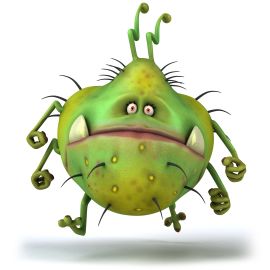
The flu bug is a dreaded monster that appears seasonly in many parts of the world. It skulks about, usually airborne, relying on its natural invisibility and amorphous form to squeeze through small spaces in order to infiltrate buildings where people live and work. The worst part about the flu bug is that killing it might make it all the more dangerous.

Since flu bugs are normally invisibile, they gain the advantage of subtracting 4 from “to hit” dice rolls of all opponents unable to detect them. Flu bugs can attack while invisible. They do so striking with their frail-looking arms. These attacks inflict no damage, but the creature struck must make a saving throw versus poison with a -1 penalty per successful attack by the flu bug that round. Failure means the creature contracts a disease. Once a flu bug has infected a victim, the flu bug dies, having fulfilled its purpose. Flu bugs that die this way do not spawn (see below).

Flu bugs can be harmed by normal weapons, but they are immune to most magic. Spells that cure wounds or disease affect flu bugs. A cure wounds spell causes damage to a flu bug equal to the amount the spell would normally cure. A cure disease slays the flu bug immediately (no save), and prevents the flu bug from spawning. Otherwise, when a flu bug is killed, it spawns a number of new flu bugs equal to the original monster’s hit points unless the area in which the flu bug died, including everyone and everything it came into contact with, is thoroughly sanitized. These new flu bugs spawn in 1d4 hours, and gain 1 hit point per hour thereafter until they reach whatever their maximum hit points might be.

The disease caused by the flu bug is debilitating and potentially fatal. Each day for the 3-8 days, the victim suffers these effects:

* A cumulative 10% loss of hit points due to weakness and fatigue.
* The loss of 2 points from both Strength and Constitution due to joint pain, vomiting, and difficulty breathing.
* The loss of 1 point of Dexterity due to dizziness.
* Difficulty concentrating due to high fever, imposing a 10% cumulative chance of miscasting spells.

Total bed rest helps mitigate these effects, making it only 50% likely that each will occur each day of the illness. Victims are also highly contagious. Double the normal modifier for “exposure to carrier of communicable disease” (from +10% to +20%, as explained on page 13, Dungeon Masters Guide). A cure disease spell removes the disease from the victim, but does not remove the effects of the disease. Those fade at the same rate by which they accrued.

March 17th, 2017  in RPG No Comments »

Masters of Vermin

Skaven never go into battle without a squirming horde of giant rats surging about their legs, swarming over enemy defenses, devouring and befouling enemy grain supplies. The packmaster herds the swarm, cares for the beasts, breeds the strongest with the strongest to create more ferocious rats, performing all of these tasks under the cruel supervision of the tribe’s verminlord, a monstrous skaven so terrifying that it rivals the power of the grey seers.

Most of the vermin that accompany a skaven tribe are giant rats. The packmaster’s bizarre husbandry practices, often combined with wicked magic, produce other, more dangerous forms of the giant rat. These ferocious rodents are used not only as troops and guards, but the larger may serve as mounts for packmasters and other exceptional skaven. To determine the stats of these rats, simply take the stas of another monster and change the name and appearance. A few examples could include blink rats, ghoul rats, horse-sized war-rats, and packs of howling worg rats.

Packmaster
Armor Class: 6 [13]
Hit Dice: 2+1
Attacks: Weapon
Special: Crack the whip
Move: 9
Save: 17
HDE/XP: 2/30

Packmasters herd the skaven horde of rats and rat-like monsters, often while mounted on a worg rat. When a packmaster cracks its whip, vermin within 60 feet know to attack with greater ferocity, and so gain a +1 bonus to attack rolls for the next 1d4 rounds. A packmaster may not crack its whip and attack in the same round.

Rat Ogre
Armor Class: 5 [14]
Hit Dice: 4+1
Attacks: Claws or weapon (1d6+1)
Special: +2 bonus on attack rolls, immune to fear
Move: 12
Save: 15
HDE/XP: 5/240

Rat ogres are giant, mutated skaven that combine minimal intelligence with great strength and bloodlust. They are fearless, and they attack with berserk fury with either weapons or their deadly claws.

Verminlord
Armor Class: 3 [16]
Hit Dice: 6+1
Attacks: Weapon (1d6+1)
Special: Disease (75%), spells
Move: 12
Save: 13
HDE/XP: 8/800

Horrific examples of pure pestilence given form, Verminlords live only to despoil and corrupt. Each clan has a verminlord, chosen from among the ranks of the packmasters by the tribe’s grey seer, who then subjects the chosen one to horrible rituals. In the unlikely event the packmaster survives, it emerges transformed as a verminlord, a creature with great skill in combat as well as magical powers. All vermin within 60 feet of a verminlord burn with rabid hatred, causing +1 damage on attacks. The verminlord’s own attacks are very likely to leave any who survive infected with some ghastly disease. It casts spells as a 3rd-level Cleric and a 3rd-level Magic-User, but its spells may never heal or cure.

March 11th, 2017  in RPG No Comments »