The Deadly Doll & Monster Contests

For the last Quid Novi? of February, I just had to do another haunt. I’m intrigued by the idea of haunts, a sort of cross between an undead monster and a trap. I’ve taken a few liberties with the haunt rules when creating the Deadly Doll.

The Deadly Doll
NE haunt (effect limited to humanoid creature who touches the doll); persistent
CR 5; XP 1,600
Caster Level 9th
Notice Perception DC 18 (the doll whispers to the holder)
hp 22; Weakness triggered by touch; Trigger touch; Reset 1 day

Effect The haunt is triggered by picking up the doll. The target must succeed a DC 17 Will save or be dominated as per the spell dominate person. The dominated person must use the doll to lure a child and then murder the child.

Destruction The doll must be burned after succeeding with a remove curse against DC 20. Otherwise, the doll will reappear 1d6 miles away from the burn site after 24 hours. Casting break enchantment against DC 20 can free a creature from the dominate person effect.

Background Once upon a dark time, an evil man crafted toys in order to lure children into his deadly clutches. Eventually, the outraged and vengeful community upon which the evil man preyed uncovered his wickedness. He suffered horribly at the mob’s hands before dying. Unfortunately, his death did not end his terror. The evil man’s basest desires survived death, infecting one of his many dolls. The Deadly Doll now serves as a focus for the evil man’s monstrous appetite for murder.

In other news, the new What Is It? contest for homebrew monsters lairs over at this EN World link. Also, voting for What Is It? 2 takes place here. Monsters for What Is It? 1 and voting results are here.

March 6th, 2011  in Contest, Quid Novi?, RPG No Comments »

More Convention Gaming, or How to Not Run an Event

(From Game Geek 15, which is free this issue.)

Way back in Game Geek 4, I mused about my experiences at OwlCon XXIX with my son Giant Boy. It was his first gaming convention, and it gave me an opportunity to look at the experience with fresh eyes. My Game Geek 4 musings focused mostly on this advice for players: Be on time, use prep time wisely, don’t hog the ball or be a wallflower, and roleplay before you roll dice.

This time I want to focus more on the other side of the GM screen. Giant Boy and I arrived about an hour before our first event was due to start. This gave us plenty of time to get our registration packets, don our spiffy OwlCon XXX shirts, hang official badges around our necks, and engage in some people watching.

Our first event was “Scooby Scooby Doo, What ARE You???” run in one of the latest iterations of Chaosium’s Call of Cthulhu. I got to play Fred. Giant Boy was six of the Harlem Globetrotters, including Curly, Sweet Clyde, and Bubblegum Tate (those last two being ‘ported in from Futurama). The other three Globetrotters were unnamed, which struck more as lazy than funny. Four other players filled the roles of Daphne, Velma, Scoob, and Shaggy; the latter two were played with impressive vocal imitations by their players. The final player did a great job as Sheriff Don Knotts. The event started more or less on time at 3:00 p.m. Although it was generally enjoyable, two convention GM no-nos reared their ugly heads.

Start on Time; Finish on Time

If an event is schedule to start at 3:00 p.m., then the GM needs to start at 3:00 p.m. If an event is scheduled for four hours, it needs to run for at least very close to four hours. The people sitting at the table almost all paid to be there, and if a GM short changes paying convention-goers on their time, that’s a lot like stealing.

“Scooby Scooby Doo, What ARE You???” started on time, but it finished nearly 90 minutes early. There we were, all having a reasonably good time roleplaying our respective cartoon characters. Five of the six Globetrotters had been mind-controlled by fungi from Yuggoth. We had rescued Snidley Moneybags from bloodthirsty cultists on an alien planet. We had finally cornered the spawn of Shub-Niggurath. More or less without warning, the event ended. Daphne unmasked the spawn, revealing first Old Man Winters and then Nyarlathotep.

It wasn’t even 6:00 p.m. Giant Boy and I had been cheated out of more than an hour of gaming fun. I cannot help but think that the Keeper could’ve kept the game going for its full time had he managed to follow this next bit of advice.

Prepare and Playtest

Our Keeper’s prep for “Scooby Scooby Doo, What ARE You???” was noticeably lacking. The character sheets had incomplete information (such as missing stats) and appeared hastily scrawled, but perhaps that was just bad penmanship.

The entire Call of Cthulhu mystery was minimally outlined in the same hasty scrawl on a single page of notebook paper. Torn scraps of paper marked several places in the rulebook, which was frequently referred to without giving the sense that the Keeper knew what he was looking for. It was obvious the Keeper was making up a lot of it as he went along, and the ingenuity of his improv skills was quickly exhausted. Several incidents turned into hard core railroads where we players had minimal to no chance to influence events. More than once, the Keeper was just flat out dismissive and ignored or countermanded player intentions.

To provide one example, when a fungus from Yuggoth abducted some of the Globetrotters, the only dice rolled were Spot Hidden checks, as if it made any sense at all that a monster could enter a brightly lit room and snatch three six-foot-plus basketball players from under the noses of five other people without being extremely obvious. When Giant Boy had his remaining Globetrotters give chase, it quickly became apparent that no action could possibly affect any sort of rescue.

All of these — the way too early ending, the incomplete character sheets, the overuse of GM fiat, the insufficient notes for the adventure and relevant rules — indicate a lack of preparation on the Keeper’s part.

Since Giant Boy and I now had about two hours before our next event started, we settled into comfy chairs, ate dinner, and engaged in more people watching. While doing this, I noticed what might have been another convention GM no-no.

Keep Your Players in the Game

During “Scooby Scooby Doo, What ARE You???” I once got up to get a couple of drinks for Giant Boy and me. On the way to the cafe, I passed by a table full of people playing Pathfinder. One of the players was a tall, dark-haired fellow with a poor attempt at a goatee. When our event ended way too early, Giant Boy and I settled into our comfy chairs and ate and watched people.

One person I watched was Poor Goatee Fellow. He packed up his stuff, shouldered his backpack, and left the Pathfinder game table, not to return even though that particular event was still going strong. This made me wonder: Why had Poor Goatee Fellow left the game? Perhaps he just got bored. Perhaps he had to leave the convention. Or, perhaps, his character was killed during gameplay and with nothing left to do he had left the table about an hour before his game actually ended.

Since I didn’t see Poor Goatee Fellow rush out of the convention, it doesn’t seem likely some emergency had called him away from the table. Other folks at the table looked like they were having fun. So, via process of elimination in my limited options scenario, Poor Goatee Fellow’s character had died during gameplay. Thus, with no way left to participate, he abandoned the table. If this is so, all I can say is, “Bad GM!”

As already pointed out, most people pay to game at a convention. My payment creates certain reasonable expectations, such as the expectation that I get to play the entire round for which I’ve registered. If a player’s character dies with more than just a few minutes left to play, a good GM will have a back-up plan. A good GM gives that player another character, let’s the player help run the monsters during fights, et cetera. What a good GM doesn’t do is say, “Sorry about that. Better luck next time.”

Once Giant Boy and I finished dinner and people watching, we strolled over to our second convention game: “Crisis of Infinite Batmen” using Green Ronin’s DC Adventures. This event started on time. It ended on time. Everyone got to participate for the entire period. The GM was obviously prepared, understood the genre, and gave us players opportunities to shine. I was Dick Grayson acting as Batman. Giant Boy was Batman Beyond. Other players were Kal-El Batman, Wolverine Batman, Batwoman, and Cyber Batman. Owlman had absorbed Bite-Mite’s cosmic powers in an attempt to rid the multiverse of all the Bruce Waynes. We had to stop him during a climatic battle in Arkham Asylum verus oodles of Jokers (including Lego Joker!).

“Crisis of Infinite Batmen” was a well-run event with only one identifiable flaw:

Don’t Over-Explain

The GM often broke the suspension of disbelief by explaining the game mechanics and inspiration behind his various villains. While I understand that he was justifiably proud of way-cool villains such as King Solomon Grundy and the Twenty-Eyed Man, the metagame explanations about the villains’ capabilities weren’t always tied to things our various Batmen would’ve known. As a result, the GM robbed us of some of the surprise and mystery.

This is a minor complaint with “Crisis of Infinite Batmen” since the overall quality of the game made up for the mild let downs. I’ve certainly seen GMs (including myself) do much worse.

The rest of OwlCon XXX the next day went swimmingly. Giant Boy and I played one last event, namely Eric Seagren’s top-notch “Scavenger Hunt of Dooooom!” wherein my son was the jedi Obi-Gyn and I was the Hulk, a half-ogre/half-clay golem. Other players included the likes of the Amazing Driderman, Snake Plissken, and Holy Cow. We romped through an Outer Planes city looking for pun-related items in order to win fame and fortune. Out of the several groups that had played this event during the convention, we placed second.

Throughout the event, it was obvious the GM was well-prepared and had playtested the adventure. The players were kept involved, and, best of all, the GM didn’t go out of his way to over-explain what was going on. Seagren respected our skills and smarts enough to let us figure out (or not) the various clues on our own.

March 1st, 2011  in RPG No Comments »

Heroes, Monsters, and Intro RPGing

One of my current projects is Heroes & Monsters, which I hope to have done in time to playtest in May. This roleplaying game hopes to provide a suitable introduction to gaming for people who’ve never to hardly ever played an RPG before. My design goals for H&M encompass four areas:

1. Flexible & Easy to Learn
I want a game that can be adapted to a wide variety of situations and scenarios within the fantasy genre. The rules of an RPG should serve the players and the kind of game they want to play rather than unnecessarily limit choices.

Many RPGs are quite complicated, presenting players with dozens to hundreds of different options, and that’s just looking at character creation. The rules that govern the use of skills, magic, and combat then contain oodles of variations, situational modifiers, and exceptions to the norms. As a result, these sorts of RPGs include hundreds of pages of rules that are not only not easy to learn, they’re down right unfriendly to new players.

H&M takes the core mechanic of the d20 System and adds to it tools to increase flexibility and flatten the learning curve. The result is an RPG that you can start playing almost right away.

2. Shared Narrative Control
Narrative control in game terms refers to the ability that players have to shape the direction of the story they are playing. In many games, the bulk of narrative control rests in the hands of the Game Master. The GM makes up the adventure, sets the challenges, determines what happens next, et cetera. More or less, the other players react to the situations set forth by the GM.

There are two unintended consequences of investing so much narrative control in the GM. First, the GM ends up doing much more work before, during, and after the game session that the other players do. Often, the GM does more work than all the other players combined. This can result in the GM getting tired of GMing, and a tired GM makes for a poorer RPG experience. Second, the other players get little training in the skills needed to be a GM. With the GM calling so many of the shots, players have less incentive to immerse themselves in the game in meaningful ways.

H&M strives to spread narrative control more evenly among all the players. The GM ends up with less work, the players with more options, and everyone with more fun.

3. Heroic
It seems like the recent trend in RPGs is toward what’s referred to as edgier or darker elements. Fans of these games claim they explore adult themes, and often toss out examples such as drug abuse or exploitation of one group by another. Drawing distinctions between right and wrong gives way to shades of moral gray that end up robbing characters’ actions of meaning. After all, if all choices are equally right, then all choices are also equally wrong.

This recent trend smacks right into one of my abiding prejudices in RPGs. I don’t like things to be edgy and dark except in contrast to the heroism of the characters. Things like drug abuse and exploitation are not entertaining, and they’re not really suitable for the good guys. I like for player characters to be genuine heroes, fighting against the forces of evil. I like for there to be a definite right and wrong, and for heroes to do their best to end up on the side of right.

I’ve written H&M so that your PC isn’t just an adventurer. Your PC isn’t a mercenary hopping from one paid mission to another. Instead, your PC is a hero. A hero might get paid for being heroic, but the money isn’t the primary motivation.

4. Cooperative
RPGs should be played cooperatively. There is no way to win an RPG. You aren’t competing against the other players, and that includes the GM. Since no one gets to win, you can instead focus on having fun and on helping ensure the other players have fun as well.

After all, what’s the sense in playing any game if you’re not having fun? H&M doesn’t really have rules for cooperation (although there are a few). Instead, the cooperative stance of an RPG deals more with the attitude of the players than the rules. Throughout the H&M PDFs, I offer suggestions about how to increase the fun. Use those that you feel work best for you, and ignore those that don’t. Best of all, invent your own suggestions. Make the game yours.

The What Is It? Contest

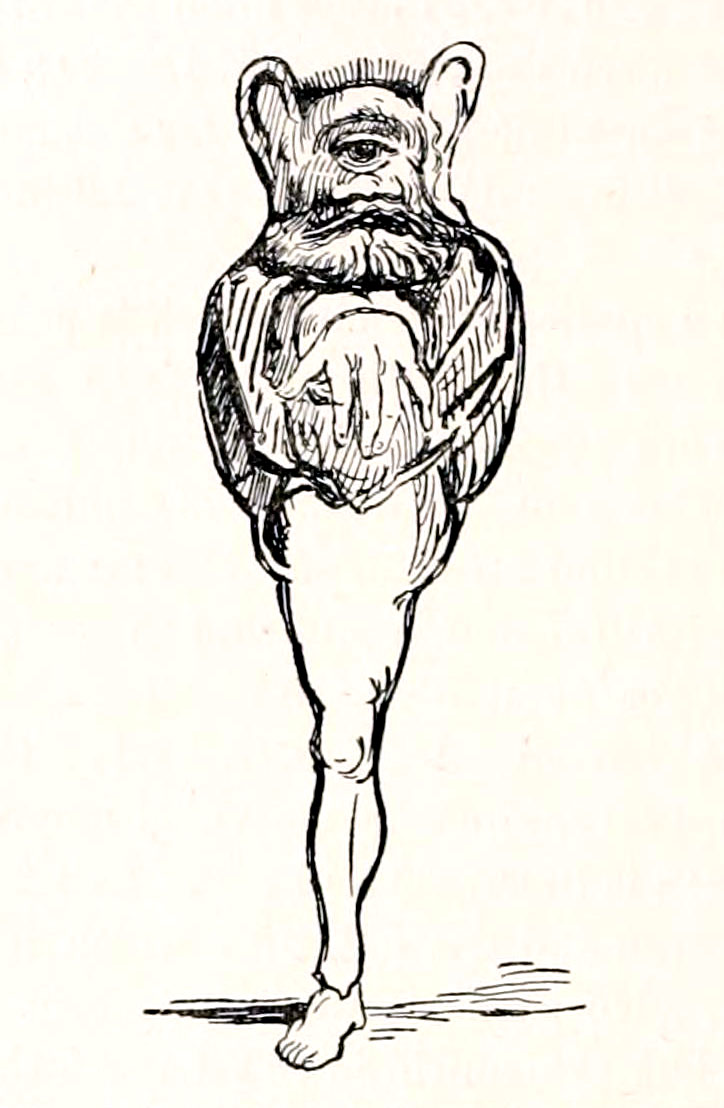
It’s time for another What Is It? Contest. This time the prize is unlimited bragging rights for having the best monster as judged by the votes of your peers plus any one PDF from my catalog. The picture for WIIC2 comes from Reginald Scot’s The Discoverie of Witchcraft (1584):

The rules are simple:

1. One submission per entrant.

2. Post a complete stat block and fluff text for the creature depicted above in the ENWorld thread linked to above using the standard format for PF monsters. Also, include at least two plot hooks for the monster.

3. Your work must be your own and cannot use anyone’s Product Identity or Closed Content material.

4. The deadline is 3 March 2011. After this, all entries are considered final.

5. A winner will be chosen via a poll set up in another thread. This poll will remain open until approximately 10 March 2011.

6. All entrants retain rights to their submissions.

The Prizes
1. The winner chosen by poll gets to brag about awesome his or her monster is.

2. The winner will receive a copy of any one PDF from my catalog. Reception of the PDF is contingent on me having a valid email address for the winner.

February 10th, 2011  in Contest, RPG No Comments »

The Declaration of Fundependence

(Written for Game Geek 14.)

When in the Course of gaming events it becomes necessary for players to dissolve the roleplaying bands which have connected them with another and to assume among the powers of Oerth, the separate and equal station to which the Rule of Fun and of Fun’s Arbiter entitle them, a decent respect to the opinions of gamerkind requires that they should declare the causes which impel them to the separation.

We hold these truths to be self-evident, that all gamers are created equal, that they are endowed by their Creator with certain unalienable Rights, that among these are Dice, Frivolity and the pursuit of Fun. — That to secure these rights, Game Groups are instituted among Gamers, deriving their just powers from the consent of the gamemastered, — That whenever any Form of Gamemastery becomes destructive of these ends, it is the Right of the Gamers to alter or to abolish it, and to institute a new Game Group, laying its foundation on such principles and organizing its powers in such form, as to them shall seem most likely to effect their Free Time and Happiness. Prudence, indeed, will dictate that Game Groups long established should not be changed for light and transient causes; and accordingly all experience hath shewn that gamerkind are more disposed to suffer, while evils are sufferable than to right themselves by abolishing the forms to which they are accustomed. But when a long train of abuses and usurpations, pursuing invariably the same Object evinces a design to reduce them under absolute Despotism, it is their right, it is their duty, to throw off such a Game Master, and to provide new House Rules for their future security. — Such has been the patient sufferance of these Game Groups; and such is now the necessity which constrains them to alter their former Systems of Gamemastery. The history of the present Game Master is a history of repeated injuries and usurpations, all having in direct object the establishment of an absolute Tyranny over these Players. To prove this, let Facts be submitted to a candid world.

He has refused his Assent to Rules, the most wholesome and necessary for the gaming good.

He has forbidden his Players to write Backgrounds of interesting and useful game hooks; and when so written, he has utterly neglected to use them.

He has canceled Game Sessions repeatedly and without advanced notice, for opposing with manly firmness his invasions on the rights of the gamers.

He has obstructed the Administration of Justice by refusing his Assent to Rules for establishing nonarbitrary Difficulty Classes.

He has made Players dependent on his Will alone for the tenure of their characters, and the amount and payment of their XP awards, causing them to languish without advancement.

He has kept among us, in times of unnecessity, Standing NPCs that hoggeth the glory without the Consent of our gamers.

He has combined with others to subject us to a jurisdiction foreign to our group, and unacknowledged by our house rules; giving his Assent to their Acts of pretended Legislation:

For nerfing large numbers of spells and class features frequently used among us:

For protecting monsters, by choosing only those invulnerable to the class features of our characters:

He has constrained our fellow Player Characters taken Captive by high Enchantments to bear Arms against their Allies, to become the executioners of their friends and Brethren, or to fall themselves by their Hands.

In every stage of these Oppressions We have Petitioned for Redress in the most humble terms: Our repeated Petitions have been answered only by repeated injury. A Game Master, whose style is thus marked by every act which may define a Tyrant, is unfit to be the game master of a free game group.

Nor have We been wanting in attentions to our Gaming brethren. We have appealed via Chat Rooms and Discussion Boards to their native justice and magnanimity, and we have conjured them by the ties of our common kindred to disavow these usurpations, which would inevitably interrupt our connections and correspondence. They too have been deaf to the voice of justice and of consanguinity, claiming that the GM is like unto God.

We, therefore, the Representatives of the united Groups of Gaming, in General Congress, Assembled, appealing to the Supreme Judge of the campaign world for the rectitude of our intentions, do, in the Name, and by Authority of the good People of these Groups, solemnly publish and declare, That these united Groups are, and of Right ought to be Free and Independent Groups, that they are Absolved from all Allegiance to the Bad Game Master, and that all gaming connection between them and the Bad Game Master, is and ought to be totally dissolved; and that as Free and Independent Groups, they have full Power to search for a new Game Master and to do all other Acts and Things which Independent Gamers may of right do. — And for the support of this Declaration, we mutually pledge to each other our Lives, our Share of the pizza money, and our sacred Honor.

February 5th, 2011  in RPG No Comments »